Amphibians · Ambystoma mexicanum
Axolotl Tank Setup
Axolotls are unique, fully aquatic salamanders that retain their juvenile external gills and finned tails into adulthood. They are captivating but sensitive pets that require a large, cold-water aquarium, gentle filtration, and strict temperature control. While they do not need terrestrial space, maintaining clean, cool water is essential for their long-term health.
- Minimum tank (adult)
- 29 gallons
- Water temperature
- 60–68°F
- Lifespan
- 10–15 years
- Essentials cost
- $159–$476
The setup at a glance
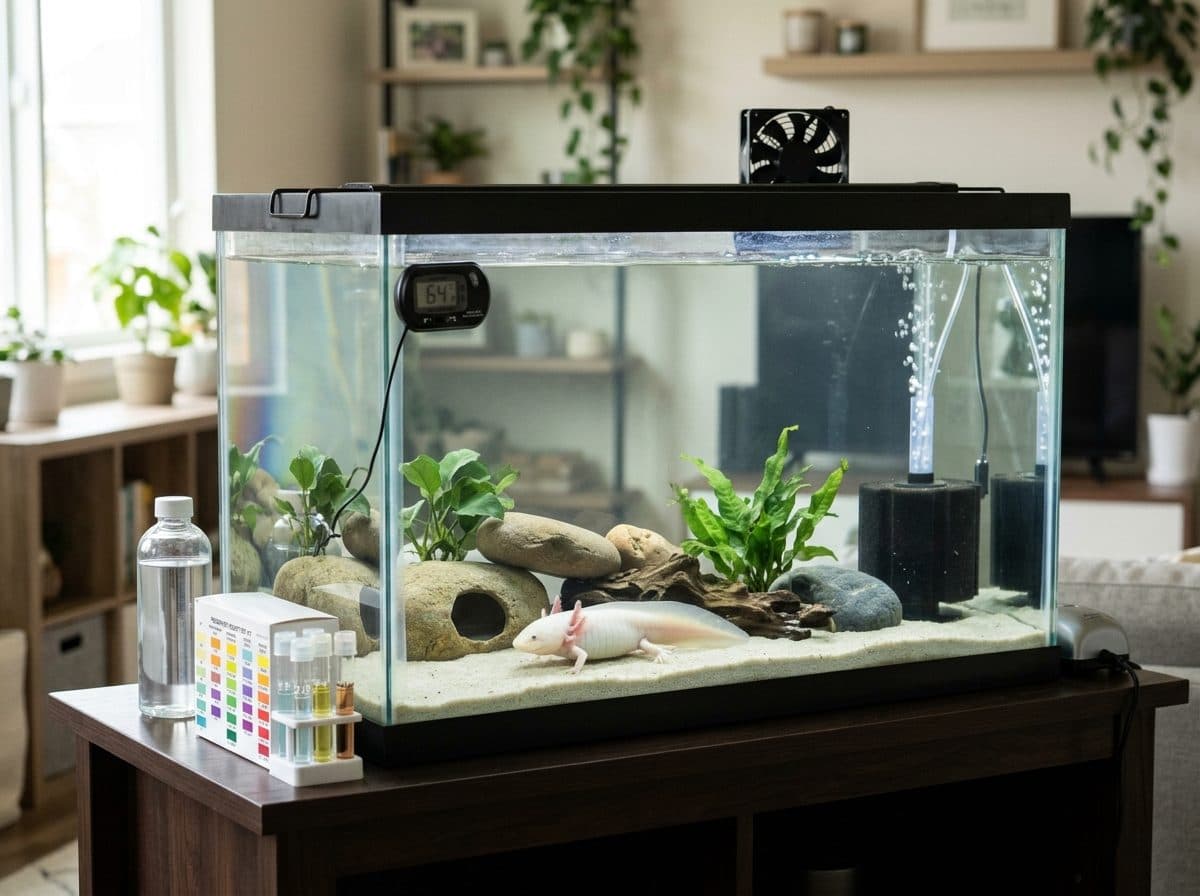
Tank size
Adult minimum: 30 × 12 × 18 in (2.5 × 1 × 1.5 ft), 29 gallons. Aquarium, horizontal layout.
Juveniles under 5 inches (13 cm) should be housed in a bare-bottom aquarium to prevent fatal impaction from ingesting substrate.
Axolotls are best housed individually; keeping multiple adults requires at least 40-55 gallons and carries a risk of accidental limb nipping during feeding.
Adult size: 9-12 in (23-30 cm) nose to tail. Lifespan: 10–15 years. Difficulty: intermediate. Hands-off: best watched; about 5–15 minutes of care a day.
Temperature & humidity
| Water | 60–68°F |
Axolotls are strictly cold-water amphibians; water temperatures exceeding 70°F (21°C) cause severe chronic stress, fungal infections, and organ failure. Never use an aquarium heater, and use a chiller or clip-on cooling fan if room temperatures rise above 68°F.
Lighting & heat
UVB: not required
Heat: none (do not use heaters or heat lamps)
Day length: 8-10 on (low light or shaded) hours
Substrate & diet
Good choices: bare bottom glass; ultra-fine aquatic sand (under 1mm, adults 5+ inches only); large smooth unglazed slate or tiles.
Avoid: aquarium gravel; river rocks or pebbles smaller than the axolotl's head; coarse sand; crushed coral.
Diet: Axolotls are carnivores that suck food into their mouth with vacuum pressure. Feed adults earthworms (live nightcrawlers or red wigglers) as a staple diet, supplemented with high-protein axolotl sinking pellets and occasional treats like frozen bloodworms or brine shrimp.
Axolotl setup checklist
Everything for a complete adult setup. Essentials are ticked; untick anything you already have.
What a Axolotl costs to keep
- Setup (essentials)
- $159–$476
- Every year after
- $105–$210
- First year, all in
- $264–$686
| Ongoing | How often | Per year |
|---|---|---|
| Live EarthwormsProvides the required high-protein staple diet for an adult axolotl. | weekly | $40–$90 |
| Sinking Axolotl PelletsServes as a shelf-stable supplementary food source rich in vitamins and protein. | every 3-6 months | $15–$30 |
| Water Conditioner (Dechlorinator)Neutralizes toxic chlorine, chloramines, and heavy metals in tap water during weekly water changes. | every 3-6 months | $15–$30 |
| Sponge Filter Replacement PadsReplaces degraded mechanical filtration media without disrupting the biological filter balance. | every 6-12 months | $10–$20 |
| Water Test Kit ReagentsReplaces chemical testing solutions to ensure accurate monitoring of ammonia, nitrite, and nitrate levels. | every 12 months | $25–$40 |
Typical US prices. Vet care isn't included: budget for a check-up with an exotics vet after you bring your pet home, and keep an emergency fund.
Before your axolotl comes home
4-6 weeks before
Fishless cycle the aquarium
Establishes essential beneficial bacteria that convert lethal ammonia and nitrites into less harmful nitrates before introducing the animal.
1 week before
Test cooling equipment and verify stable water temperatures
Ensures the chiller or fans consistently maintain water temperatures between 60°F and 68°F without risking thermal shock or heat stress.
48 hours before
Perform a final water test and parameter check
Confirms zero ammonia, zero nitrite, and safe nitrate levels before the axolotl enters the environment.
day one
Float the transport bag and acclimate temperature slowly
Prevents severe temperature shock by matching bag water to tank water before release.
first two weeks
Monitor water parameters daily and leave the animal undisturbed
Prevents stress-induced illness while ensuring the bio-load of the new animal does not cause a dangerous ammonia spike.
within first month
Schedule a baseline health exam with an exotics veterinarian
Establishes professional medical care and checks for subtle signs of stress, infection, or fungal issues early.
Common setup mistakes
- Using gravel, small stones, or coarse sand, which axolotls vacuum up and ingest, causing fatal intestinal impaction.
- Allowing water temperatures to rise above 70°F (21°C) or using standard aquarium heaters.
- Adding an axolotl to an uncycled tank before establishing beneficial nitrogen-cycling bacteria.
- Using strong filter pumps that create high water flow, which causes severe chronic stress and gill curl in axolotls.
- Using water conditioners containing aloe vera or copper, which damage delicate amphibian skin and gills.
Before you buy: Axolotls are illegal to own as pets in California, Maine, New Jersey, and Washington D.C., and require specific permits in Hawaii and New Mexico.
Questions people ask
What tank size does an adult axolotl need?
While 20-gallon long tanks were historically recommended, modern care standards emphasize a minimum of 29 to 40 gallons for a single adult. Larger tanks maintain stable water chemistry, dilute waste, and provide ample bottom floor space.
What temperature should axolotl water be kept at?
Water temperature must remain strictly between 60°F and 68°F (15–20°C). Temperatures above 70°F (21°C) trigger heat stress, severe fungal growth, and mortality.
What do I need to buy for a complete axolotl setup?
A basic setup requires a 29+ gallon aquarium, a low-flow sponge filter, an air pump, a water chilling fan or chiller, a liquid master test kit, dechlorinator, smooth ceramic hides, and high-protein food.
How much does it cost to set up an axolotl habitat?
The essential equipment costs $160 to $480; the low end assumes a clip-on cooling fan, the high end a small aquarium chiller for warmer homes.
Sources
The numbers on this page come from these care sheets and references, checked October 2026. How we make these guides.