Fish · Carassius auratus
Goldfish Tank Setup
Goldfish are heavy-waste, cold-water social fish that require high-volume filtration and spacious swimming areas, far beyond popular myths of keeping them in bowls. Modern veterinary standards require long horizontal aquariums or outdoor ponds, rigorous biological filtration, and consistent water cycling. Common single-tail goldfish grow significantly larger than fancy double-tail varieties and demand substantially higher water volume.
- Minimum tank (adult)
- 40 gallons
- Water temperature
- 65–72°F
- Lifespan
- 10–20 years
- Essentials cost
- $236–$501
The setup at a glance
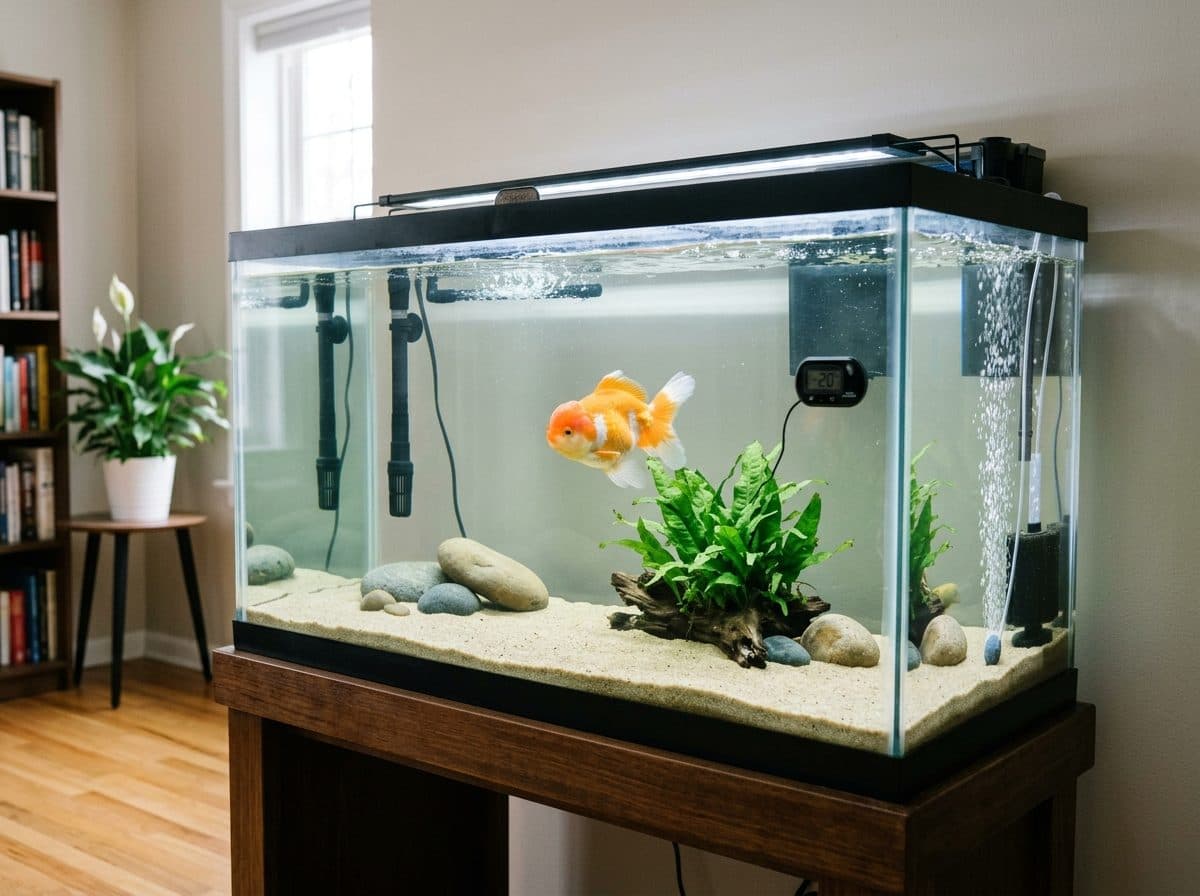
Tank size
Adult minimum: 36 × 18 × 16 in (3 × 1.5 × 1.3 ft), 40 gallons. Aquarium, horizontal layout.
Juveniles grow rapidly and should be started in an adult-sized habitat immediately to avoid permanent skeletal stunting.
Fancy varieties need a minimum of 30–40 gallons for the first fish plus 10–20 gallons per additional fish, while single-tail varieties need 75+ gallons or ponds.
Adult size: 8-14 in (20-35 cm) nose to tail. Lifespan: 10–20 years. Difficulty: intermediate. Hands-off: best watched; about 5–15 minutes of care a day.
Temperature & humidity
| Water | 65–72°F |
Goldfish are temperate cold-water fish that generally do not require a aquarium heater at standard room temperature. Avoid tropical temperatures above 75°F to maintain high dissolved oxygen levels.
Lighting & heat
UVB: not required
Heat: not required
Day length: 8-10 on hours
Substrate & diet
Good choices: fine aquarium sand; bare bottom tank.
Avoid: coarse gravel; pea gravel (choking hazard); colored artificial painted gravel.
Diet: Goldfish are omnivores that require a staple diet of high-quality sinking pellets, complemented by blanched green vegetables (like shelled peas or spinach) and occasional frozen protein foods like bloodworms or brine shrimp. Sinking pellets prevent fancy breeds from gulping air at the surface, which causes swim bladder issues.
Goldfish setup checklist
Everything for a complete adult setup. Essentials are ticked; untick anything you already have.
What a Goldfish costs to keep
- Setup (essentials)
- $236–$501
- Every year after
- $80–$155
- First year, all in
- $316–$656
| Ongoing | How often | Per year |
|---|---|---|
| Sinking pellets and frozen foodsProvides essential daily nutrition without causing surface-air gulping and swim bladder issues. | monthly | $20–$40 |
| Aquarium water conditionerNeutralizes toxic chlorine, chloramines, and heavy metals in tap water during weekly water changes. | monthly | $15–$30 |
| Filter media and mechanical padsReplaces degraded mechanical filter pads and chemical filter media while maintaining biological filtration. | every 1-3 months | $25–$50 |
| Master water test kit reagentsEnsures accurate liquid testing supplies are available to monitor toxic ammonia, nitrite, and nitrate levels. | every 6-12 months | $20–$35 |
Typical US prices. Vet care isn't included: budget for a check-up with an exotics vet after you bring your pet home, and keep an emergency fund.
Before your goldfish comes home
4-6 weeks before
Fishless cycle the aquarium
Establishes essential beneficial bacteria colonies to process toxic fish waste into safer nitrates before introducing live fish.
1 week before
Monitor water parameters and run equipment
Verifies that ammonia and nitrite drop to zero within 24 hours while checking filter flow and water temperature stability.
Day one
Float and float-acclimate the goldfish
Equalizes water temperature and slowly matches water chemistry to prevent lethal temperature or osmotic shock.
First two weeks
Test water daily and perform extra water changes
Detects unexpected ammonia or nitrite spikes early as the biological filter adjusts to the new biological load.
First month
Establish baseline wellness with an exotics veterinarian
Ensures the fish is parasite-free and provides a professional baseline assessment for long-term health.
Common setup mistakes
- Keeping goldfish in un-filtered bowls or tiny desktop aquariums.
- Using medium gravel which goldfish swallow and choke on while foraging.
- Failing to perform a complete nitrogen cycle before adding fish to the tank.
- Mixing high-activity single-tail comets with slow-moving fancy varieties in the same tank.
- Overfeeding floating flake foods, causing buoyancy and swim bladder complications.
Questions people ask
What size tank do I need for a goldfish?
For a single fancy goldfish, start with a minimum of 30–40 gallons, adding 10–20 gallons per additional fish. Single-tail varieties (comets, commons, shubunkins) need at least 75 gallons or an outdoor pond due to their large adult length and high activity level.
Do goldfish need warm water or a heater?
Goldfish are cold-water species thriving between 65°F and 72°F. In a climate-controlled home, a heater is usually unnecessary unless room temperatures drop below 60°F or fluctuate drastically.
What essential equipment do I need to start a goldfish tank?
You need a large aquarium (40+ gallons), an oversized filter rated for twice the tank size, dechlorinator, fine sand or bare bottom, an air stone bubbler, a liquid water test kit, and sinking goldfish pellets.
How much does a proper goldfish setup cost?
A complete, modern setup meeting basic animal welfare standards typically costs between $240 and $510 upfront, including the tank, high-capacity filter, air pump, food, test kits, and water treatments.
Sources
The numbers on this page come from these care sheets and references, checked October 2026. How we make these guides.