Birds · Melopsittacus undulatus
Budgie (Parakeet) Cage Setup
Budgies are small, intelligent, and highly social Australian parrots that make active and engaging pets. Modern avian care requires a spacious horizontal flight cage, proper perches, varied enrichment, and a pellet-and-vegetable diet rather than seed-only feeds. A successful setup prioritizes horizontal flight space, non-toxic materials, and safe indoor environmental conditions.
- Minimum cage (adult)
- 30×18×18 in
- Temperature
- 68–78°F
- Humidity
- 40–60%
- Essentials cost
- $187–$425
The setup at a glance
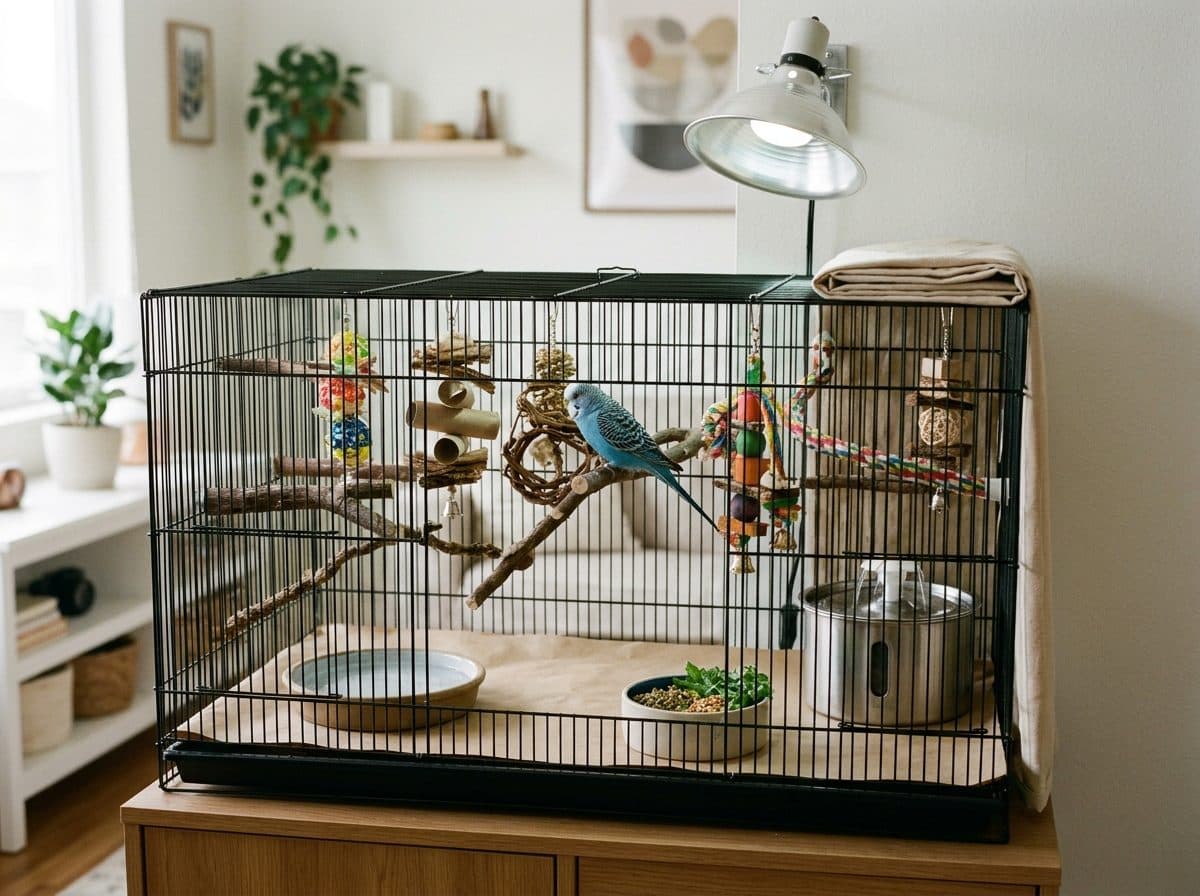
Cage size
Adult minimum: 30 × 18 × 18 in (2.5 × 1.5 × 1.5 ft). Horizontal wire flight cage with 0.5 in or smaller bar spacing, horizontal layout.
A pair requires at least a 30 x 18 x 18 inch cage, but larger flight cages (32-36+ inches wide) are strongly recommended to prevent crowding and territorial aggression.
Adult size: 7-8 in (18-20 cm) head to tail tip. Lifespan: 8–12 years. Difficulty: beginner. Tolerates brief handling; about 30–60 minutes of care a day.
Temperature & humidity
| Warm side | 68–78°F |
| Night | 65–72°F |
| Humidity | 40–60% |
Budgies do best in stable ambient indoor room temperatures. Keep cages well away from drafty doors, windows, and direct air conditioning vents.
Lighting & heat
UVB: recommended, not required: 2.4% UVA/UVB avian lamp mounted above top grate for 8-10 hours daily (window glass blocks UVB)
Heat: ambient room heating (68-78°F); thermo-regulated avian panel heater if ambient room drops below 65°F
Day length: 10-12 on hours
Substrate & diet
Good choices: plain unprinted paper; paper towels; newspaper; brown craft paper.
Avoid: wood shavings (cedar or pine); corn cob bedding; crushed walnut shells; sand or grit paper liners; cat litter.
Diet: Diet should consist of 60-70% high-quality formulated pellets, 20-30% fresh vegetables and leafy greens, and no more than 10% seeds or millet treats. All-seed diets cause severe fatty liver disease and vitamin deficiencies.
Budgie (Parakeet) setup checklist
Everything for a complete adult setup. Essentials are ticked; untick anything you already have.
What a Budgie costs to keep
- Setup (essentials)
- $187–$425
- Every year after
- $270–$560
- First year, all in
- $457–$985
| Ongoing | How often | Per year |
|---|---|---|
| Formulated pellets and seed treatsA high-quality pellet diet forms the main nutrition and needs regular replenishment alongside small training seeds. | monthly | $60–$120 |
| Fresh vegetables and leafy greensDaily fresh chop provides essential vitamins and micronutrients to round out the pelleted diet. | weekly | $100–$200 |
| Paper cage linersClean tray liners are replaced constantly to maintain hygiene and prevent mold or fungal spore growth. | monthly | $20–$45 |
| Foraging toys and shreddablesSoft wood, paper, and woven toys are quickly destroyed during healthy daily foraging activities and need replacing. | every 1-2 months | $50–$120 |
| Cuttlebone and mineral blockProvides essential calcium and aids in natural beak conditioning as it gets chewed down. | every 3-6 months | $15–$30 |
| Avian UVB bulbUVB output degrades over time even while visible light output remains, requiring an annual bulb change. | every 12 months | $25–$45 |
Typical US prices. Vet care isn't included: budget for a check-up with an exotics vet after you bring your pet home, and keep an emergency fund.
Before your budgie comes home
1 week before
Assemble cage and set up lighting and heating
Ensures all natural perches, bowls, and supplemental heaters are securely installed before the bird arrives.
48 hours before
Run environmental tests and monitor thermal gradient
Verifies that ambient room temperatures and panel heaters maintain safe ranges without placing heat sources too close to perches.
Day one
Place bird in cage and minimize room stress
Allows the budgie to discover food and water dishes in a quiet environment without being panicked by human movement.
First 3-7 days
Observe from a distance and avoid handling
Gives the bird time to acclimate to its environment and lowers stress, preventing acute shock or immune suppression.
First week
See an avian vet and quarantine from other birds
Have the bird examined as soon as possible, and keep it in a separate room for 30-45 days before it meets any other birds.
First month onwards
Begin positive-reinforcement hand taming and dietary conversion
Builds trust gradually through hand-feeding treats while transitioning the bird onto a complete pelleted diet.
Common setup mistakes
- Buying a tall, narrow cage instead of a wide, horizontal flight cage.
- Feeding an all-seed diet which leads to fatty liver disease and early mortality.
- Using smooth dowel perches exclusively, causing foot sores and arthritis.
- Exposing the bird to toxic Teflon/PTFE fumes, scented candles, or aerosols in the home.
- Using loose particulate substrates like corn cob, walnut shell, or sand on the cage floor.
- Installing cage mirrors, which can induce obsessive courting behavior and mental distress.
Questions people ask
What size cage do I need for a budgie?
A single budgie requires a horizontal cage measuring at least 30 x 18 x 18 inches with bar spacing no wider than 1/2 inch. Always prioritize horizontal length over cage height so the bird has room to fly back and forth.
What temperature should a budgie cage be kept at?
Budgies thrive in standard room temperatures between 68°F and 78°F. Ensure the cage is positioned away from cold window drafts, external doors, and direct air conditioning vents.
What supplies do I need to set up a budgie cage?
You need a wide flight cage (1/2 in bar spacing), natural branch perches of varied thickness, stainless steel food and water dishes, shredding toys, cuttlebone, unprinted paper liners, and a quality pellet diet supplemented with fresh vegetables. An avian UVB light is recommended but optional.
How much does a complete budgie setup cost?
A complete safe habitat setup—including a quality flight cage, natural perches, toys, bowls, cage cover, and initial food supplies—typically costs between $190 and $430 for the essentials; an optional avian UVB light adds $35-$70.
Sources
The numbers on this page come from these care sheets and references, checked October 2026. How we make these guides.