Birds · Nymphicus hollandicus
Cockatiel Cage Setup
Cockatiels are gentle, intelligent, and social Australian parrots known for their expressive crests and whistle mimicry. They require an expansive cage with plenty of horizontal space for short flights, varied perch textures to prevent foot issues, and a diet centered on pellets rather than seed.
- Minimum cage (adult)
- 24×24×30 in
- Temperature
- Room temp
- Humidity
- 40–60%
- Essentials cost
- $218–$466
The setup at a glance
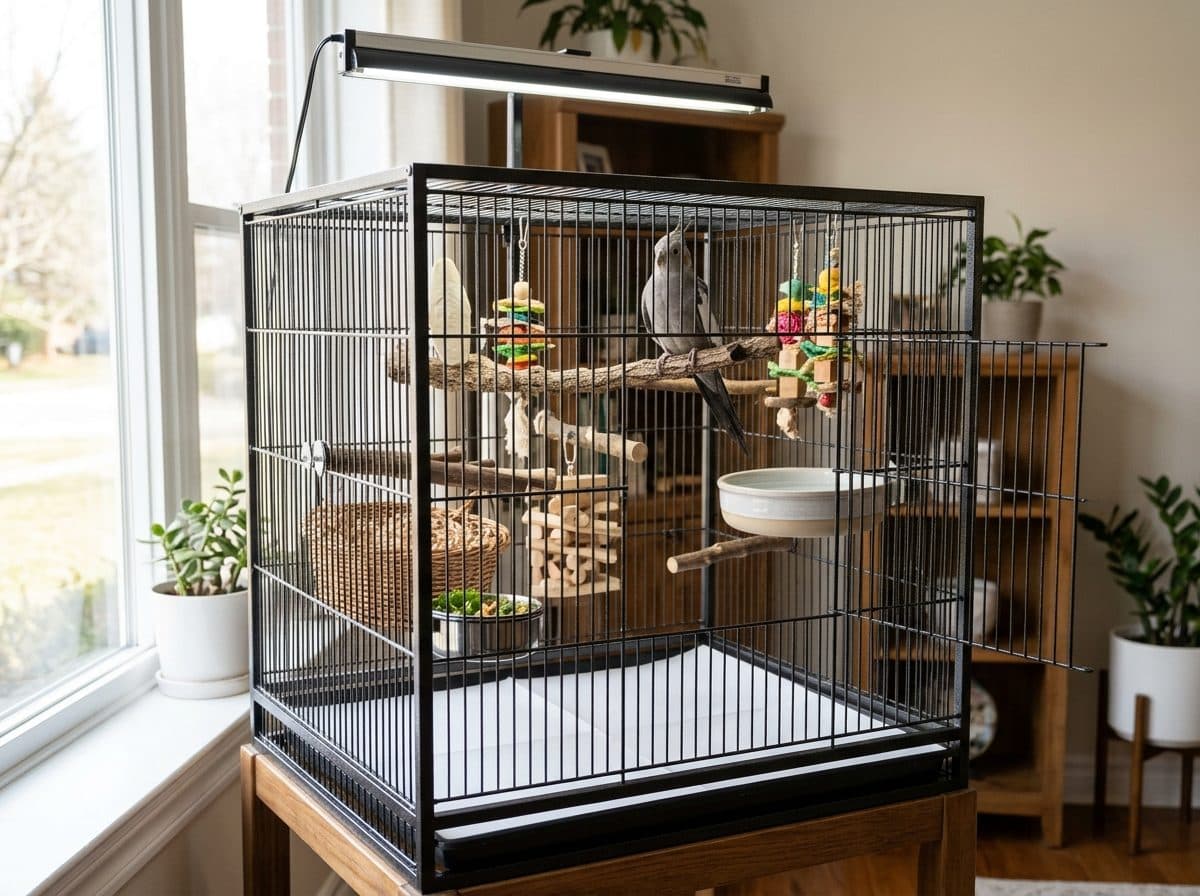
Cage size
Adult minimum: 24 × 24 × 30 in (2 × 2 × 2.5 ft). Wire cage with solid floor tray, horizontal layout.
Housing a pair requires a larger enclosure (minimum 36 x 24 x 36 inches) to prevent territorial conflict and allow adequate flight space.
Adult size: 11-14 in (28-35 cm) head to tail. Lifespan: 10–20 years. Difficulty: beginner. Enjoys handling; about 45–90 minutes of care a day.
Temperature & humidity
| Humidity | 40–60% |
Cockatiels do best in standard indoor temperatures between 65°F and 80°F. Keep the cage away from cold drafts, direct sunlight, and heating or AC vents.
Lighting & heat
UVB: recommended, not required: linear 2.4% avian T5 UVB fixture mounted 12-18 inches above top perch (window glass blocks UVB)
Heat: Not required under normal indoor ambient room temperatures (65-80°F)
Day length: 10-12 on hours
Substrate & diet
Good choices: unprinted newsprint paper; paper towel cage liners; plain brown butcher paper.
Avoid: crushed walnut shells; corn cob bedding; cedar shavings; pine shavings; cat litter.
Diet: A balanced daily diet should consist of 60-70% high-quality avian pellets, 20-30% fresh dark leafy greens and chopped vegetables, and 10% high-quality seed mix or millet spray used strictly for foraging and rewards.
Cockatiel setup checklist
Everything for a complete adult setup. Essentials are ticked; untick anything you already have.
What a Cockatiel costs to keep
- Setup (essentials)
- $218–$466
- Every year after
- $370–$780
- First year, all in
- $588–$1,246
| Ongoing | How often | Per year |
|---|---|---|
| Pelleted bird dietPellets serve as the primary staple diet and must be replenished regularly to ensure continuous optimal nutrition. | monthly | $80–$150 |
| Fresh vegetables and dark leafy greensFresh produce provides essential vitamins, minerals, and dietary enrichment on a daily basis. | weekly | $100–$200 |
| Cage paper liners and cuttleboneClean liners maintain cage hygiene and fresh cuttlebone provides essential calcium and beak trimming. | monthly | $60–$120 |
| Shredding and foraging toysParrots destructively play with toys to satisfy natural foraging instincts, requiring frequent replacement for mental stimulation. | every 1-2 months | $100–$250 |
| Avian linear T5 UVB bulbUVB lamps lose their beneficial ultraviolet output over time despite still producing visible light. | every 12 months | $30–$60 |
Typical US prices. Vet care isn't included: budget for a check-up with an exotics vet after you bring your pet home, and keep an emergency fund.
Before your cockatiel comes home
1-2 weeks before
Assemble the cage and install perches, bowls, and lighting fixtures
Setting up equipment early ensures the environment is safe, stable, and completely ready before the bird arrives.
48 hours before
Run the UVB light on a timer and verify safe distance from top perches
Testing lighting schedules ensures proper mounting distances and prevents accidental eye or skin strain.
Day one
Place the bird quietly in the enclosure with accessible food and water, then limit loud interaction
Minimizing stress on arrival prevents severe panic, injury from night frights, or acute illness.
First 3-7 days
Observe from a respectful distance and avoid forcing physical contact or handling
Allowing the bird time to acclimate to its environment builds trust and reduces relocation stress.
First week
See an avian vet, quarantine from other birds, and begin offering treats by hand
An early exam confirms baseline health, 30-45 days in a separate room protects other birds, and hand-offered treats build trust.
Common setup mistakes
- Feeding an all-seed diet, which causes severe vitamin A deficiency, liver disease, and shortened life expectancy.
- Using smooth, uniform wooden dowels, which lead to pressure sores and bumblefoot.
- Placing cages in or near kitchens, where heated nonstick cookware (PTFE/Teflon) emits fatal airborne toxins.
- Choosing cages with bar spacing greater than 5/8 inch, risking head entrapment or escape.
- Using particulate substrates like walnut shells or corn cob, which harbor dangerous fungal mold and cause impaction if ingested.
Questions people ask
What size cage do I need for a cockatiel?
A single cockatiel requires a cage that is at least 24 in long, 24 in wide, and 30 in high, with bar spacing no wider than 1/2 to 5/8 inch. Horizontal length is more important than height so the bird can spread its wings and take short flights.
What temperature range is safe for a cockatiel?
Cockatiels thrive in comfortable room temperatures between 65°F and 80°F. Protect them from cold drafts, air conditioner airflow, and direct window heat exposure.
What essential supplies do I need to buy for a cockatiel setup?
You need a flight cage with safe bar spacing, natural branch perches of varied sizes, stainless steel dishes, high-quality pellets, cuttlebone, shredding toys, and safe paper cage liners. An avian UVB light is recommended but optional.
How much does a basic cockatiel cage setup cost?
The essentials typically cost between $220 and $470 USD total, including a quality flight cage ($110-$220), perches and toys, bowls, pellets, cuttlebone, liners, and a bath; an optional avian UVB light adds $35-$70.
Sources
The numbers on this page come from these care sheets and references, checked October 2026. How we make these guides.