Backyard Poultry · Gallus gallus domesticus
Baby Chicks (Brooder) Brooder Setup
Raising baby chicks requires a warm, draft-free brooder setup that replaces the heat of a mother hen. Success depends on maintaining proper thermal zones, dry and non-toxic bedding, and continuous access to fresh water and balanced chick feed.
- Minimum brooder (adult)
- 48×24×18 in
- Basking spot
- 90–95°F
- Humidity
- 40–60%
- Essentials cost
- $125–$329
The setup at a glance
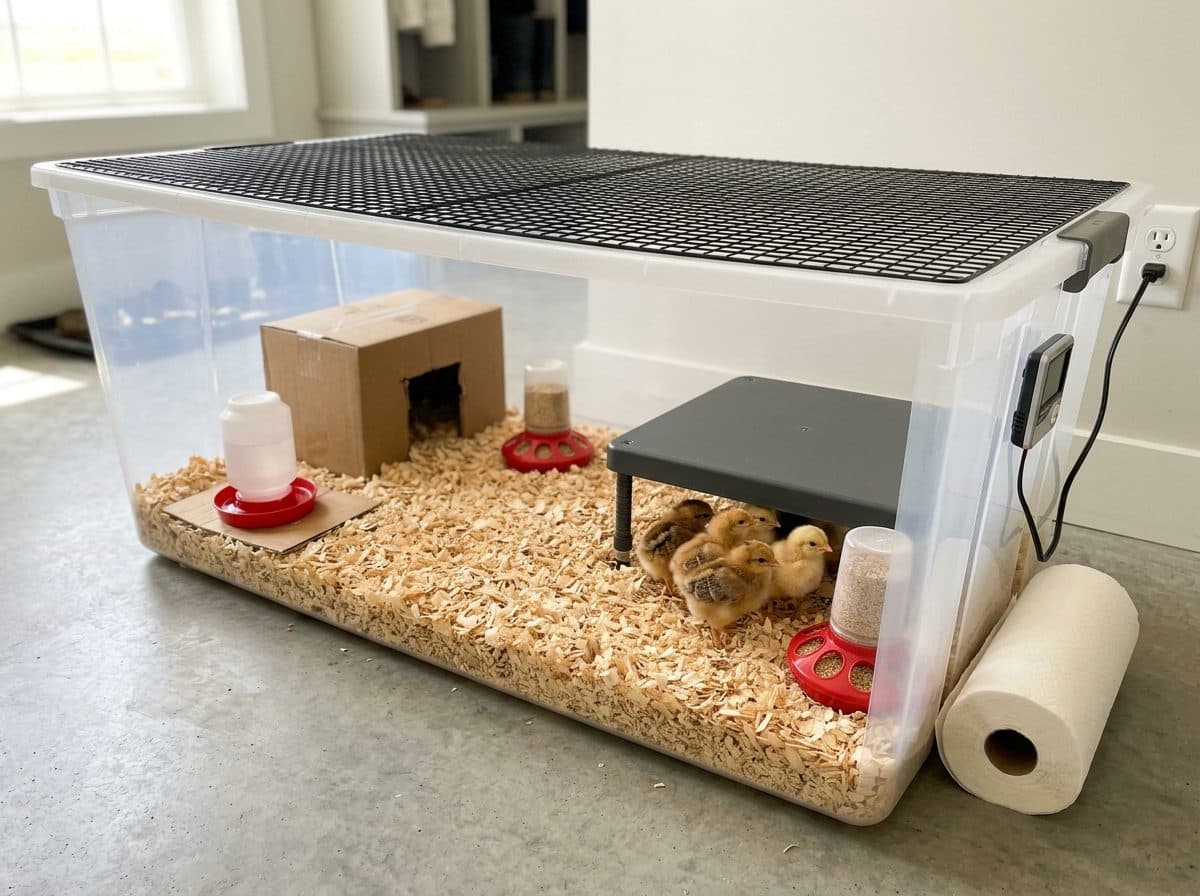
Brooder size
Adult minimum: 48 × 24 × 18 in (4 × 2 × 1.5 ft). Solid-walled brooder box or plastic tub, horizontal layout.
Provide a minimum of 0.5 sq ft per chick for weeks 1-2, expanding to 1-2 sq ft per chick as they reach 3-6 weeks.
Chicks are social flock animals and should always be raised in groups of at least 3-6 individuals.
Adult size: 12-24 in (30-60 cm) tall. Lifespan: 8–12 years. Difficulty: beginner. Tolerates brief handling; about 15–30 minutes of care a day.
Temperature & humidity
| Basking surface | 90–95°F |
| Warm side | 90–95°F |
| Cool side | 70–80°F |
| Night | 70–80°F |
| Humidity | 40–60% |
Measure at chick height (about 2 in above bedding). Week 1: 95°F; week 2: 90°F; week 3: 85°F; week 4: 80°F; week 5: 75°F; week 6: 70°F, then remove heat once chicks are fully feathered (about 6 weeks). Always keep a cooler area so chicks can move away from the heat source.
Lighting & heat
UVB: not required
Heat: radiant chick heat plate (preferred; far lower fire risk than a heat lamp). If a heat lamp is the only option, hang it from a chain with a backup tie about 18 in above the bedding, use a wire guard, and keep it clear of walls and bedding.
Day length: 12-14 on hours
Substrate & diet
Good choices: pine wood shavings; paper towels (first 3 days only); hemp bedding.
Avoid: cedar shavings; slick newspaper; fine sawdust; loose sand.
Diet: Feed chick starter crumble (18-20% protein) free-choice. Medicated (amprolium) starter helps prevent coccidiosis in unvaccinated chicks; use non-medicated starter if chicks were vaccinated for coccidiosis. Serve water in a shallow chick waterer with marbles or clean pebbles in the trough for the first few days so chicks cannot drown. Offer chick-sized insoluble grit only if feeding treats or anything besides starter.
Baby Chicks (Brooder) setup checklist
Everything for a complete adult setup. Essentials are ticked; untick anything you already have.
What a Baby Chicks costs to keep
- Setup (essentials)
- $125–$329
- Every year after
- $110–$235
- First year, all in
- $235–$564
| Ongoing | How often | Per year |
|---|---|---|
| Chick starter, then grower feedChicks eat starter for about the first 6 weeks, then switch to grower; costs assume a brood of 3-6. | every 2-4 weeks | $60–$120 |
| Pine Wood Shavings BeddingAbsorbent bedding must be replaced regularly to keep the brooder dry and minimize ammonia buildup. | monthly | $40–$90 |
| Chick GritInsoluble grit is necessary to help chicks grind down any foods or treats beyond standard commercial starter feed. | every 6-12 months | $10–$25 |
Typical US prices. Vet care isn't included: budget for a check-up with an exotics vet after you bring your pet home, and keep an emergency fund.
Before your baby chicks comes home
1 week before
Assemble brooder and gather all supplies
Setting up early ensures you are not missing crucial items when the chicks arrive.
48 hours before
Turn on the heat plate and verify brooder temperatures
Running heating elements in advance allows you to measure and dial in safe temperatures without risking chick health.
24 hours before
Line the brooder floor with paper towels over the bedding
Paper towels give chicks traction and prevent them from accidentally eating pine shavings instead of feed.
day one
Dip each chick's beak in fresh water upon unboxing
Teaching chicks where water is located immediately prevents fatal dehydration from travel stress.
first two weeks
Check chicks daily for pasty butt and transition off paper towels
Clearing dried droppings prevents fatal intestinal blockages while chicks adjust to their diet and brooder environment.
4-6 weeks
Schedule a wellness check with an avian vet
A routine exam helps confirm normal growth, feathering, and overall health before chicks transition to outdoor housing.
Common setup mistakes
- Using cedar shavings, which release toxic aromatic oils that irritate respiratory tracts.
- Using slick newspaper directly on floor surfaces, which can cause 'spraddle leg'.
- Heating the entire brooder uniformly, preventing chicks from escaping excessive heat.
- Using high-wattage clamp lamps hung unsafely by cords, creating a severe fire hazard.
- Failing to expand brooder space as chicks rapidly grow, causing crowding and feather pecking.
Before you buy: Check local municipal zoning regulations prior to purchasing chicks, as many cities enforce flock size limits, prohibit roosters, or require backyard chicken permits.
Questions people ask
What size brooder do I need for baby chicks?
Plan for at least 0.5 sq ft per chick for the first 2 weeks, expanding to 1-2 sq ft per bird by weeks 3-6. A 100-gallon plastic stock tank or equivalent 48x24 inch tote works well for 6-8 chicks.
What temperature should a chick brooder be?
Keep it at 95°F at chick height under the heat source during the first week, then lower it by 5°F each week until it reaches 70°F (about week 6) and chicks are fully feathered.
What equipment is essential to raise baby chicks?
You need a draft-free container, a safe heat source (such as a heating plate), dry pine shavings, a chick waterer, feeder trough, and starter feed crumble.
How much does a basic chick brooder setup cost?
A safe, initial DIY brooder setup typically costs between $120 and $330 total for the container, heat plate, thermometer, feeder, waterer, bedding, cover screen, and starter feed.
Sources
The numbers on this page come from these care sheets and references, checked October 2026. How we make these guides.