Backyard Poultry · Anas platyrhynchos domesticus
Ducklings (Brooder) Brooder Setup
Raising ducklings requires a clean, draft-free brooder with strict temperature control, proper nutritional niacin levels, and accessible drinking water deep enough for bill washing without causing body soaking. Ducklings grow rapidly and create significant moisture, making substrate management and adequate ventilation essential to prevent chilling and illness.
- Minimum brooder (adult)
- 48×24×24 in
- Water temperature
- 65–75°F
- Humidity
- 40–60%
- Essentials cost
- $174–$350
The setup at a glance
Brooder size
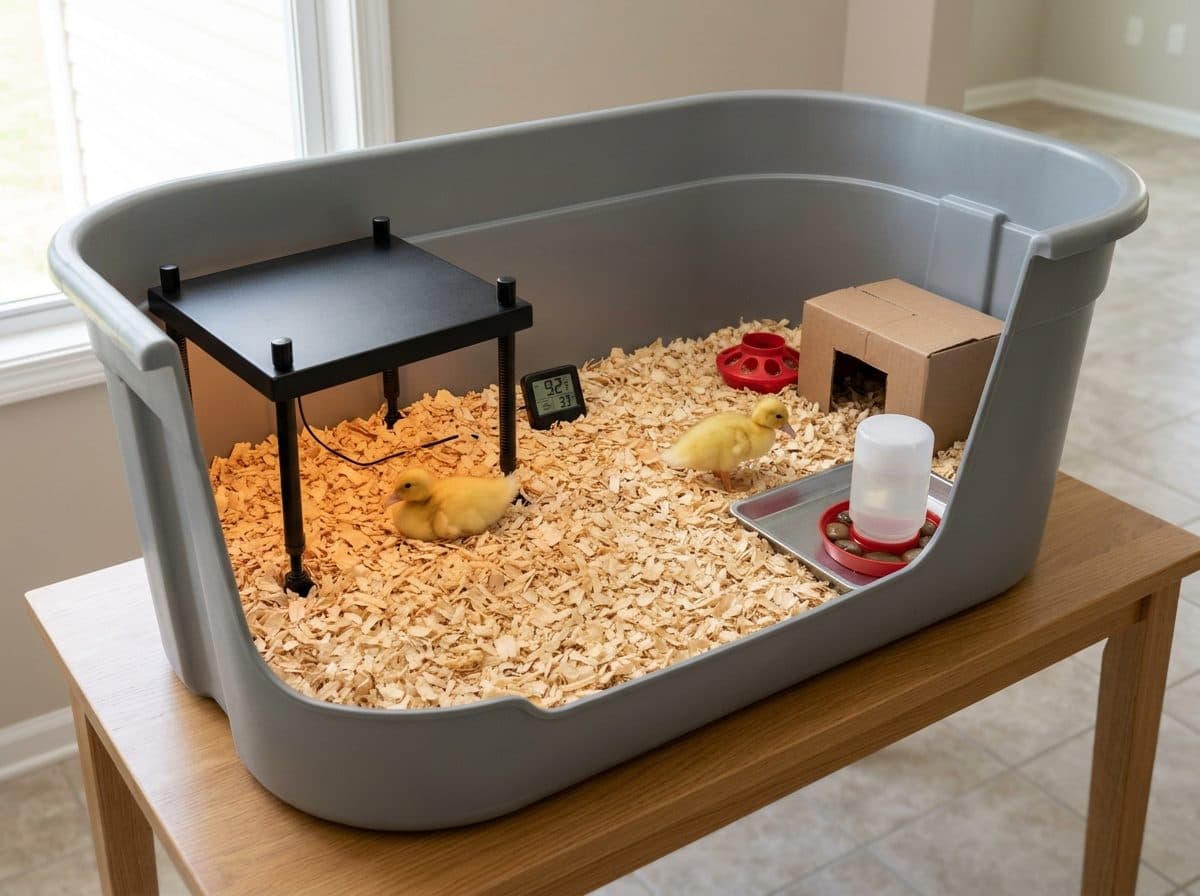
Adult minimum: 48 × 24 × 24 in (4 × 2 × 2 ft). Brooder box or stock tank, horizontal layout.
Day-old ducklings require roughly 0.5 sq ft per bird initially, but brooder space must be expanded rapidly each week to accommodate fast growth.
Ducklings are highly social and should never be raised alone; keep them in pairs or small groups of similar age.
Adult size: 14-26 in (35-65 cm) body length. Lifespan: 8–12 years. Difficulty: intermediate. Tolerates brief handling; about 25–45 minutes of care a day.
Temperature & humidity
| Basking surface | 85–90°F |
| Warm side | 80–85°F |
| Cool side | 70–75°F |
| Night | 70–85°F |
| Water | 65–75°F |
| Humidity | 40–60% |
Slightly cooler than chicks. Week 1: about 90°F under the heat source (85-90°F at its edge); week 2: 85°F; week 3: 80°F; week 4: 75°F; then room temperature (about 70°F). Ducklings often need heat for only 2-4 weeks. Always keep a cool zone so ducklings can self-regulate, and keep them dry: a wet, chilled duckling can die.
Lighting & heat
UVB: not required
Heat: radiant brooder heat plate (preferred; far lower fire risk than a heat lamp). If a heat lamp is the only option, hang it from a chain with a backup tie about 18 in above the bedding, use a wire guard, and keep it clear of walls and bedding.
Day length: 12-14 on hours
Substrate & diet
Good choices: paper towels (first 2-3 days, changed often); large-flake pine shavings; chopped straw; horse bedding pellets.
Avoid: cedar shavings; fine sawdust; newspaper; slippery plastic; cat litter.
Diet: Feed non-medicated waterfowl starter crumbles (at least 20% protein) for the first 3 weeks, then a 17-20% grower. Do not feed medicated chick starter. If using chick or all-flock starter, add niacin (brewer's or nutritional yeast, or a niacin supplement) to prevent leg problems. Water must be deep enough for ducklings to dip their whole bill and nostrils, but in a waterer they cannot climb into; no open bowls or swimming water in the brooder.
Ducklings (Brooder) setup checklist
Everything for a complete adult setup. Essentials are ticked; untick anything you already have.
What a Ducklings costs to keep
- Setup (essentials)
- $174–$350
- Every year after
- $205–$410
- First year, all in
- $379–$760
| Ongoing | How often | Per year |
|---|---|---|
| Unmedicated Waterfowl FeedDucklings eat large amounts of starter crumble for 3 weeks, then grower feed; costs assume a pair or small group. | monthly | $60–$120 |
| Large-Flake Pine ShavingsDucklings create significant moisture and water mess requiring frequent, complete bedding replacement to prevent mold and ammonia build-up. | weekly | $100–$200 |
| Brewer's Yeast / Niacin SupplementConsistent niacin intake prevents crippling metabolic bone deformities and leg weakness during rapid growth phases. | monthly | $20–$40 |
| Poultry-Safe DisinfectantFrequent sanitation of waterers, feeders, and brooder surfaces is essential due to heavy bacterial load from wet droppings. | monthly | $25–$50 |
Typical US prices. Vet care isn't included: budget for a check-up with an exotics vet after you bring your pet home, and keep an emergency fund.
Before your ducklings comes home
1 week before
Assemble brooder and position radiant heat plate
Setting up in advance ensures all structural components, splash trays, and equipment fit securely in a draft-free environment.
48 hours before
Power on heat source and test thermal gradients with a digital thermometer
Verifying correct surface temperatures prior to animal entry prevents fatal hypothermia or overheating in delicate hatchlings.
day one
Dip duckling beaks in warm water upon placement and offer food immediately after
Guiding their bills directly to the water source prevents dehydration after transport and teaches them where to drink.
first two weeks
Perform daily health checks and adjust heat plate height as ducklings grow quickly
Monitoring crop fill, leg strength, posture, and heat-seeking behavior catches leg weakness or failure to thrive early.
3-4 weeks
Schedule an initial exotic vet checkup or flock health consult
Establishing care with a poultry-knowledgeable veterinarian allows baseline screening for parasites or early developmental issues.
Common setup mistakes
- Failing to supplement adequate niacin, leading to crippling joint and leg deformities.
- Using slippery newspaper or smooth plastic flooring, which causes splayed leg (spraddle leg).
- Allowing full swimming access before oil glands and adult feathers develop, causing chill or drowning.
- Leaving soaked bedding inside the brooder, creating mold, chilling, and respiratory risks.
- Using toxic cedar shavings or fine wood dust that causes severe respiratory irritation.
Before you buy: Check local city zoning laws and poultry ordinances regarding backyard flock permissions and duck limits before acquiring ducklings.
Questions people ask
How big should a duckling brooder be?
Start with at least 0.5 to 1 sq ft per duckling for week 1, expanding to 2-3 sq ft per bird by weeks 3 to 4 as ducklings grow rapidly.
What temperature do ducklings need in a brooder?
Keep about 90°F under the heat source (85-90°F at its edge) in week 1, a little cooler than chicks, then lower it by 5°F each week until it matches room temperature (about 70°F).
Why do ducklings need extra niacin?
Ducklings grow much faster than chicks and require extra niacin (Vitamin B3) for proper bone and leg joint development; deficiency causes permanent leg bowing.
How much does a duckling brooder setup cost?
A standard duckling brooder setup costs between $170 and $350 total for the tub, heat plate, thermometer, waterer, splash tray, feeder, bedding, feed, niacin supplement, and disinfectant.
Sources
The numbers on this page come from these care sheets and references, checked October 2026. How we make these guides.