Backyard Poultry · Coturnix japonica
Quail Brooder Setup
Coturnix quail are compact, fast-growing game birds popular for high egg yield and quiet demeanor. Successful housing requires predator-proof security, proper head height management to prevent flush injury, and excellent ventilation. They thrive in coveys with adequate floor space and dust-bathing opportunities.
- Minimum brooder (adult)
- 36×24×12 in
- Temperature
- 65–75°F
- Humidity
- 40–70%
- Essentials cost
- $160–$333
The setup at a glance
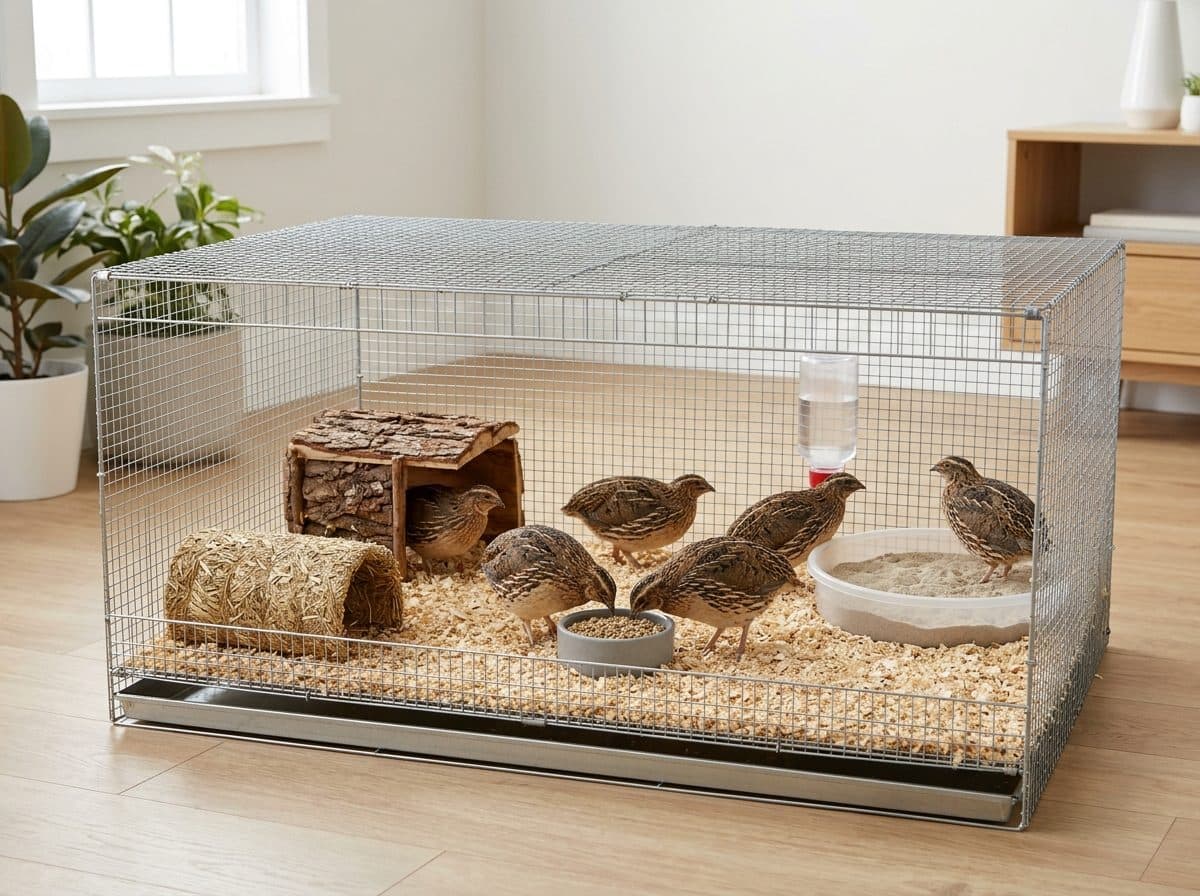
Brooder size
Adult minimum: 36 × 24 × 12 in (3 × 2 × 1 ft). Wire hutch with drop pan or covered aviary, horizontal layout.
Chicks require a solid-bottom brooder box with non-slip bedding for their first 4-5 weeks before moving to wire hutches.
Keep quail in coveys of 4-6 birds per cage with a ratio of 1 male per 4-5 females to prevent aggression.
Adult size: 4.5-5.5 in (11-14 cm) tall, 3.5-5 oz (100-140 g). Lifespan: 2–4 years. Difficulty: beginner. Tolerates brief handling; about 10–20 minutes of care a day.
Temperature & humidity
| Warm side | 65–75°F |
| Cool side | 50–65°F |
| Night | 45–65°F |
| Humidity | 40–70% |
Adult Coturnix quail handle cool temperatures well down to 40°F if kept dry and sheltered from wind drafts. Chicks need brooder heat starting at 95°F in week 1, dropping 5°F each week until fully feathered (about 4-5 weeks).
Lighting & heat
UVB: not required (outdoor ambient light or standard indoor broad-spectrum bulb)
Heat: radiant brooder heat plate (preferred) or securely chained, guarded heat lamp, only for chicks under 5 weeks old; adults need none
Day length: 14-16 on hours
Substrate & diet
Good choices: pine shavings; coarse sand; coated 1/2 in wire floor with drop tray; chopped straw.
Avoid: cedar shavings; fine sawdust; newspaper sheets; uncoated sharp hardware cloth.
Diet: Feed commercial game bird or turkey starter feed with 24-30% protein for chicks and 20-24% protein game bird layer crumbs for adults. Provide clean water in nipple cup drinkers; chicks need shallow waterers with marbles or pebbles in the trough, as they drown easily. Offer crushed oyster shell on the side for laying hens.
Quail setup checklist
Everything for a complete adult setup. Essentials are ticked; untick anything you already have.
What a Quail costs to keep
- Setup (essentials)
- $160–$333
- Every year after
- $225–$390
- First year, all in
- $385–$723
| Ongoing | How often | Per year |
|---|---|---|
| Game bird layer feedAdult quail require a continuous supply of high-protein game bird feed to maintain health and egg production. Costs assume a covey of 4-6. | monthly | $120–$180 |
| Kiln-dried pine shavingsBedding must be replaced regularly to manage moisture, control ammonia, and keep the hutch sanitary. | monthly | $60–$120 |
| Dust bath sandFresh sand is required periodically to allow quail to clean their feathers and prevent external parasites. | every 2-3 months | $30–$60 |
| Crushed oyster shellLaying females need supplemental calcium to build strong eggshells and prevent metabolic bone issues. | every 6 months | $15–$30 |
Typical US prices. Vet care isn't included: budget for a check-up with an exotics vet after you bring your pet home, and keep an emergency fund.
Before your quail comes home
1 week before
Assemble hutch and prepare brooder
Setting up the habitat early ensures secure latches, correct spacing, and clean bedding are ready prior to arrival.
48 hours before
Test and calibrate heating equipment
Running the heat plate or guarded heat lamp without chicks confirms proper surface temperature and eliminates hot or cold spots.
Day one
Dip beaks in water and offer shallow food
Manually dipping each bird's beak in water with marbles ensures they learn to drink immediately and prevents drowning or dehydration.
First two weeks
Minimize physical handling and monitor brooder temp
Quail are easily stressed and fragile, so leaving them to acclimate without excess handling prevents fatal panic injuries.
4-5 weeks old
Transition from starter to layer diet and remove brooder heat
Once fully feathered, quail no longer require supplemental brooder heat and need lower protein levels with calcium for adult health.
First month
Establish care with an avian veterinarian
A wellness check confirms overall flock health and establishes a professional relationship before urgent medical issues arise.
Common setup mistakes
- Building cages between about 18 inches and 6 feet tall, which causes fatal head injuries when quail startle and flush straight up.
- Feeding standard chicken layer feed, which lacks the high protein content (20%+) required for game birds.
- Using wide 1-inch chicken wire that allows predators like raccoons or snakes to reach through and grab birds.
- Keeping multiple roosters in small enclosures, leading to severe territorial fighting and feather picking.
- Failing to provide a dry dust bath, causing skin parasites and poor feather health.
Before you buy: Check local zoning and HOA rules, as some municipalities restrict poultry or game birds in residential areas. Coturnix (Japanese) quail usually need no state permit, but native species such as bobwhite often require a state game breeder license; check your state wildlife agency.
Questions people ask
How much cage space do Coturnix quail need?
Provide a minimum of 1 square foot of floor space per bird in cage or hutch setups. For 5 to 6 adult quail, a 36x24-inch hutch offers ideal room.
How high should a quail coop or hutch be?
Enclosures should either be under 12 inches tall (so birds cannot gain speed when flushing upward) or over 6 feet tall in aviaries. Avoid middle heights between about 18 inches and 6 feet, as head impacts against hard roofs can break their necks.
How much does it cost to set up a quail flock?
Initial setup costs for a covey of 5-6 quail usually range between $160 and $340, including the hutch, feeder, waterer, dust bath, bedding, oyster shell, and initial feed.
Sources
The numbers on this page come from these care sheets and references, checked October 2026. How we make these guides.