Freshwater Shrimp Tank Setup
Freshwater dwarf shrimp (such as Neocaridina and Caridina species) are active, rewarding micro-invertebrates that keep aquariums clean by grazing on biofilm and algae. Successful shrimp keeping requires a fully cycled aquarium with stable water parameters, gentle filtration, and plenty of live plants or surfaces for grazing.
- Minimum tank (adult)
- 5 gallons
- Water temperature
- 68–78°F
- Lifespan
- 1–2 years
- Essentials cost
- $128–$259
The setup at a glance
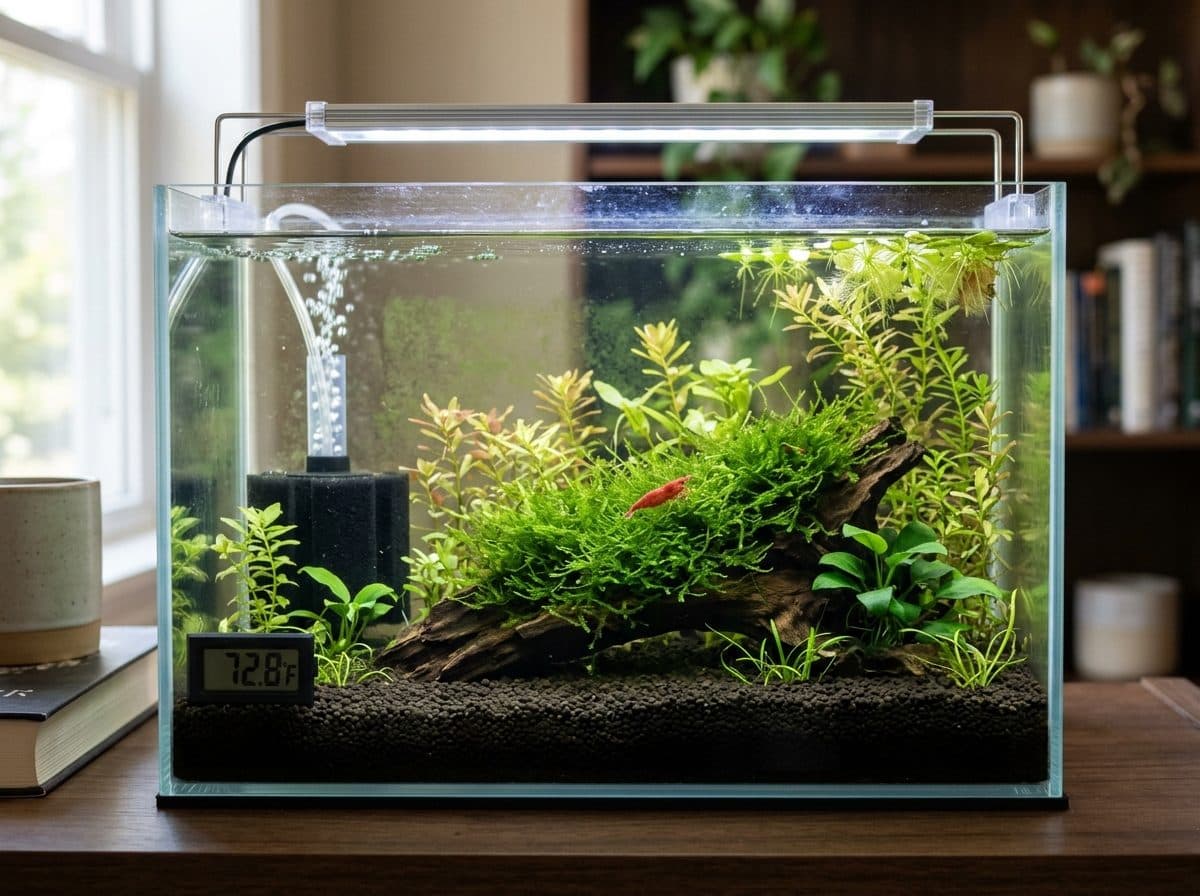
Tank size
Adult minimum: 16 × 8 × 10 in (1.3 × 0.7 × 0.8 ft), 5 gallons. Aquarium, horizontal layout.
Baby shrimp (shrimplets) are tiny and easily sucked into power filters, requiring an air-driven sponge filter or ultra-fine mesh intake guard.
Freshwater dwarf shrimp are highly social and thrive in colonies, with a 5-10 gallon tank easily supporting dozens of individuals.
Adult size: 0.8-1.5 in (2-4 cm). Lifespan: 1–2 years. Difficulty: beginner. Hands-off: best watched; about 2–5 minutes of care a day.
Temperature & humidity
| Water | 68–78°F |
Parameter stability and appropriate mineral levels (general hardness and carbonate hardness for molting) are critical. Rapid temperature or water chemistry shifts can trigger fatal molting issues.
Lighting & heat
UVB: not required
Heat: not required (use a small adjustable aquarium heater if room drops below 68°F)
Day length: 8-10 hours LED lighting to promote healthy live plant and biofilm growth hours
Substrate & diet
Good choices: inert fine dark aquarium gravel; specialized active aquarium soil; fine dark aquarium sand.
Avoid: coarse jagged gravel; substrates containing added copper or unknown chemical additives.
Diet: Freshwater shrimp are omnivorous detritivores that graze constantly on naturally occurring biofilm and algae. Supplement their diet 2-3 times per week with high-quality sinking shrimp pellets, blanched vegetables, and calcium-rich foods.
Freshwater Shrimp setup checklist
Everything for a complete adult setup. Essentials are ticked; untick anything you already have.
What a Freshwater Shrimp costs to keep
- Setup (essentials)
- $128–$259
- Every year after
- $38–$77
- First year, all in
- $166–$336
| Ongoing | How often | Per year |
|---|---|---|
| Invertebrate sinking pelletsProvides essential nutrients, minerals, and protein to supplement grazing and support healthy molting. | every 6-12 months | $10–$20 |
| Aquarium water conditionerDechlorinates tap water and neutralizes heavy metals during mandatory routine water changes. | every 6-12 months | $8–$15 |
| Liquid master test kit refill reagentsEnsures accurate tracking of ammonia, nitrite, nitrate, and pH levels to protect sensitive invertebrates from toxic spikes. | every 12 months | $15–$30 |
| Replacement sponge filter padsReplaces degraded biological filter media over time without disrupting beneficial bacterial colonies all at once. | every 6-12 months | $5–$12 |
Typical US prices. Vet care isn't included: budget for a check-up with an exotics vet after you bring your pet home, and keep an emergency fund.
Before your freshwater shrimp comes home
4-6 weeks before
Set up tank and fully cycle the nitrogen aquarium filter
Establishes vital beneficial bacteria colonies necessary to process lethal ammonia and nitrites into safer nitrates before adding delicate shrimp.
2-3 weeks before
Plant live moss and stem plants under LED lighting
Allows plants time to root, adjust, and grow natural biofilm and micro-algae that serve as the primary food source for shrimp.
48 hours before
Verify temperature and test water parameters
Ensures the water is completely stable at 0 ppm ammonia, 0 ppm nitrite, low nitrates, and within safe temperature bounds.
Day one
Drip acclimate shrimp slowly over 1.5 to 2 hours
Prevents fatal osmotic shock caused by sudden changes in water hardness, pH, and temperature between holding water and tank water.
First two weeks
Observe behavior, avoid handling, and test water parameters bi-weekly
Minimizes stress during initial tank adjustment while catching any unexpected post-stocking ammonia spikes early.
Common setup mistakes
- Adding shrimp to an uncycled or newly set-up aquarium before a mature biofilm layer has formed.
- Using fish medications, fertilizers, or tap water containing copper, which is highly toxic to invertebrates.
- Overfeeding the tank, which causes water quality crashes and planaria outbreaks.
- Performing large, fast water changes rather than slow drip-acclimating or topping off with parameter-matched water.
- Using strong filter intakes without sponge guards, causing baby shrimp to be sucked in.
Questions people ask
What tank size do I need for freshwater shrimp?
A 5 to 10-gallon aquarium is ideal for beginners. While shrimp have a very low bioload, larger water volumes help buffer against sudden water parameter fluctuations.
What water temperature do freshwater shrimp need?
Most popular dwarf shrimp (like Neocaridina) thrive in room-temperature water between 68°F and 78°F. Consistency is far more important than exact temperature.
What supplies do I need to set up a shrimp tank?
You need a glass tank, an air-driven sponge filter, an air pump, a plant LED light, dark fine substrate, live plants (like Java moss), a water dechlorinator, and an aquarium liquid test kit.
How much does it cost to set up a freshwater shrimp tank?
A basic 5 to 10-gallon shrimp setup typically costs between $130 and $260 for equipment, hardscape, plants, and starter food, plus $25 to $50 for a starter colony of shrimp.
Sources
The numbers on this page come from these care sheets and references, checked October 2026. How we make these guides.