Praying Mantis Enclosure Setup
Praying mantises are rewarding, low-maintenance insect pets known for their deliberate movements and predatory hunting behavior. Setup success depends on providing a tall enclosure with a mesh ceiling for safe upside-down molting, adequate cross-ventilation, and proper humidity control. Keepers must house mantises individually to prevent fatal cannibalism.
- Minimum enclosure (adult)
- 8×8×12 in
- Temperature
- 72–82°F
- Humidity
- 50–60%
- Essentials cost
- $70–$144
The setup at a glance
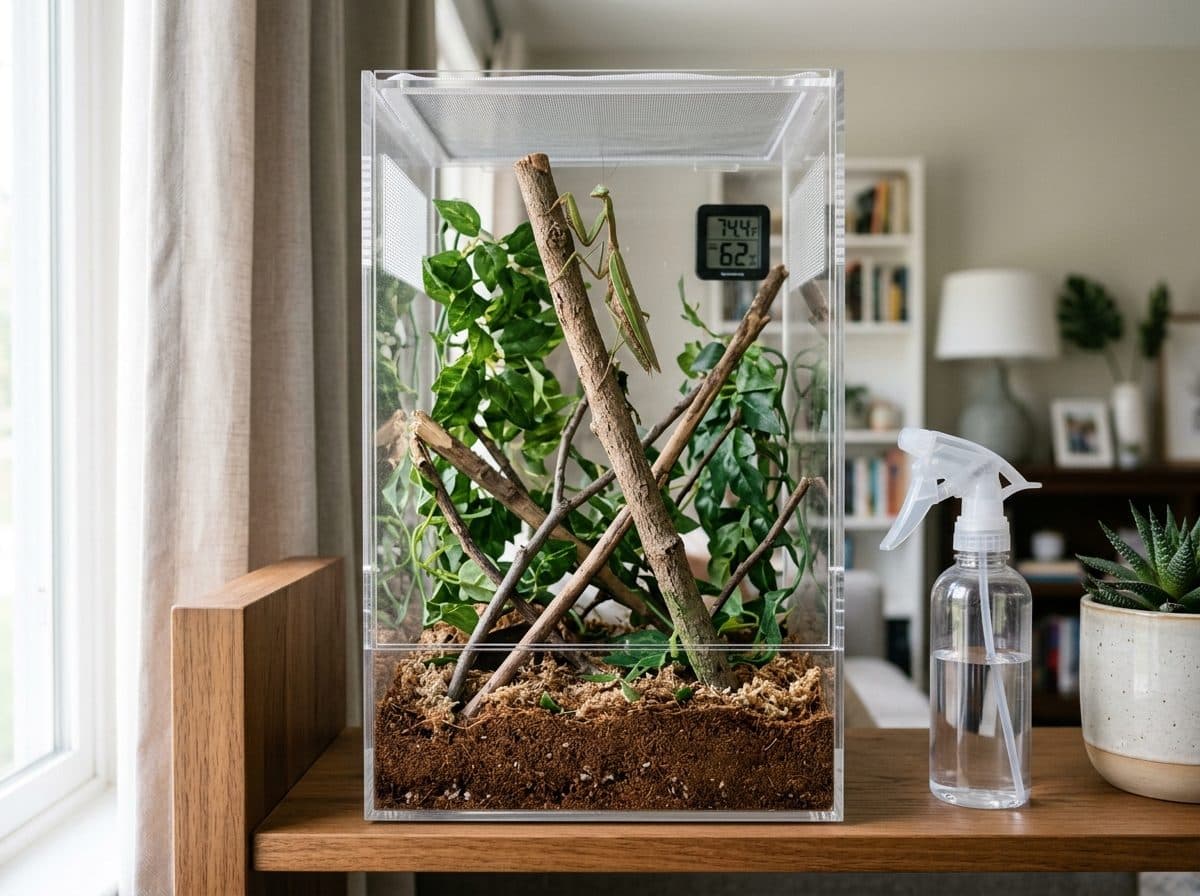
Enclosure size
Adult minimum: 8 × 8 × 12 in (0.7 × 0.7 × 1 ft). Vertical mesh or glass terrarium, vertical layout.
Young nymphs should be raised in smaller ventilated containers, such as 32 oz deli cups with mesh lids, so they can easily find prey and molt without falling long distances.
Mantises must be housed strictly individually, as cohabitation leads to cannibalism regardless of food availability.
Adult size: 2-4 in (5-10 cm) body length. Lifespan: up to 1 year. Difficulty: beginner. Tolerates brief handling; about 5–10 minutes of care a day.
Temperature & humidity
| Warm side | 72–82°F |
| Night | 65–72°F |
| Humidity | 50–60% |
Maintain moderate humidity with a gentle daily misting of spring or purified water, providing drinking water droplets while aiding the molting process. Ensure excellent cross-ventilation to prevent stagnant, humid air, which causes fatal fungal and bacterial infections.
Lighting & heat
UVB: not required
Heat: none at normal room temperature; if the room drops below 68°F, use a small heat mat on the outside of one enclosure wall with a thermostat, never a desk lamp aimed at the enclosure
Day length: 12-14 on hours
Substrate & diet
Good choices: paper towel; coco coir; sphagnum moss.
Avoid: loose sand; aquarium gravel; potting soil with chemical fertilizers or pesticides; cedar shavings.
Diet: Strict obligate insectivores that hunt live prey, including flightless fruit flies for hatchlings and houseflies, dubia roaches, or crickets for larger adults. Feed every 1 to 3 days and always remove uneaten prey, especially crickets, which can attack a soft, newly molted mantis.
Praying Mantis setup checklist
Everything for a complete adult setup. Essentials are ticked; untick anything you already have.
What a Praying Mantis costs to keep
- Setup (essentials)
- $70–$144
- Every year after
- $80–$175
- First year, all in
- $150–$319
| Ongoing | How often | Per year |
|---|---|---|
| Flightless fruit fly culturesNymphs and small mantises require ongoing fresh cultures of small live prey to sustain growth. | monthly | $40–$80 |
| Feeder insects (flies, roaches, crickets)Sub-adult and adult mantises need a steady supply of appropriately sized live insects. | monthly | $30–$70 |
| Coconut coir substrateReplacing moist substrate periodically prevents mold, bacteria build-up, and unpleasant odors. | every 2-3 months | $10–$25 |
Typical US prices. Vet care isn't included: budget for a check-up with an exotics vet after you bring your pet home, and keep an emergency fund.
Before your praying mantis comes home
1 week before
Set up the enclosure completely
Installing sticks, vines, mesh, and substrate in advance ensures a secure, properly structured environment.
48 hours before
Test and adjust ambient temperatures and humidity levels
Monitoring parameters with the animal absent ensures the environment is warm and humid enough to support successful molting without extreme fluctuations.
Day one
Gently transfer the mantis and mist the enclosure walls
Providing elevated humidity and a calm environment allows the mantis to hydrate and settle into its new space safely.
First week
Offer prey conservatively and minimize handling
Leaving the mantis alone reduces stress while it acclimates to its new feeding schedule and environment.
First month and beyond
Remove uneaten live prey immediately during molting signs
Preventing loose prey from attacking a soft, freshly molted mantis prevents fatal injuries during vulnerable developmental stages.
Common setup mistakes
- Housing multiple praying mantises together, which results in violent cannibalism.
- Using a horizontal or short enclosure that prevents the mantis from hanging fully extended while molting.
- Leaving live feeder insects (especially crickets) in the enclosure while the mantis is molting.
- Providing poor airflow or over-misting, leading to stagnant moisture and lethal fungal infections.
- Using metal mesh lids that tear or deform delicate mantis feet and claws during climbing.
Before you buy: Never release a pet mantis or its egg cases (oothecae) outdoors, as non-native species can harm native insects. Shipping live insects across state lines can require a USDA APHIS permit, so buy from US sellers who follow these rules.
Questions people ask
What size enclosure does a praying mantis need?
As a rule of thumb, a mantis enclosure must be at least 3 times taller than the mantis's body length and 2 times wider. For a typical 3–4 inch adult, an 8x8x12 inch or 12x12x18 inch vertical terrarium provides ideal molting clearance.
What temperature and humidity do praying mantises need?
Most standard pet mantis species thrive at standard indoor room temperatures between 72°F and 82°F with humidity kept around 50% to 60% through light misting.
How much does a complete praying mantis setup cost?
A complete basic setup—including ventilated vertical enclosure, mesh ceiling, substrate, branches, misting bottle, gauge, and initial feeder insects—typically costs between $70 and $150.
Sources
The numbers on this page come from these care sheets and references, checked October 2026. How we make these guides.