Tarantula Enclosure Setup
Tarantulas are hardy, quiet, low-maintenance pets that thrive in modest spaces when given the correct enclosure style for their species. Success relies on proper ventilation, species-appropriate substrate depth, and avoiding dangerous fall heights or intense heat sources.
- Minimum enclosure (adult)
- 12×12×12 in
- Temperature
- 68–78°F
- Humidity
- 50–80%
- Essentials cost
- $60–$156
The setup at a glance
Enclosure size
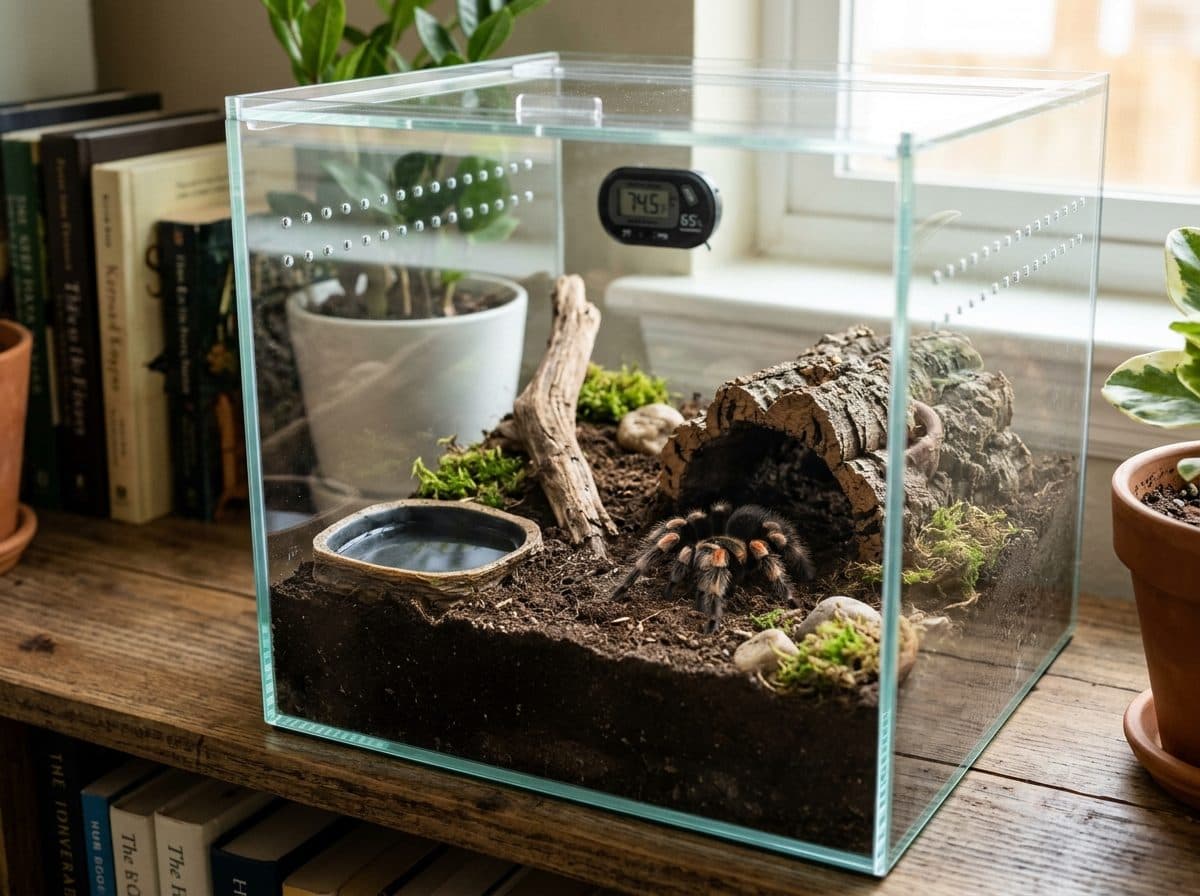
Adult minimum: 12 × 12 × 12 in (1 × 1 × 1 ft). Acrylic or glass terrarium sized to leg span: wide and low for terrestrial, tall and front-opening for arboreal, deep substrate for fossorial, any orientation.
Spiderlings and juveniles must be kept in smaller enclosures (like deli cups or sling vials) to prevent escape, ease feeding, and reduce stress.
Tarantulas are solitary and cannibalistic; house them individually.
Adult size: 4-10 in (10-25 cm) leg span. Lifespan: 5–25 years. Difficulty: beginner. Hands-off: best watched; about 1–3 minutes of care a day.
Temperature & humidity
| Warm side | 68–78°F |
| Night | 68–72°F |
| Humidity | 50–80% |
Most species thrive at comfortable room temperatures (68–78°F). Arid species need dry substrate plus a water dish; tropical species need part of the substrate kept damp. Maintain humidity via cross-ventilation and overflowing the water dish or dampening one side of the substrate, not by turning the tank into a soggy swamp.
Lighting & heat
UVB: not required
Heat: none (ambient room heat is sufficient; avoid heat lamps and under-tank heat mats)
Day length: ambient room light hours
Substrate & diet
Good choices: coco fiber; organic topsoil (fertilizer-free); peat moss blend.
Avoid: cedar shavings; pine shavings; calcium sand; gravel; potting soil with chemical fertilizers.
Diet: Strict carnivores feeding on live, size-appropriate insects such as crickets, dubia roaches, and mealworms. Feed adults every 1–2 weeks and remove uneaten prey within 24 hours.
Tarantula setup checklist
Everything for a complete adult setup. Essentials are ticked; untick anything you already have.
What a Tarantula costs to keep
- Setup (essentials)
- $60–$156
- Every year after
- $30–$75
- First year, all in
- $90–$231
| Ongoing | How often | Per year |
|---|---|---|
| Live feeder insects (crickets, dubia roaches, mealworms)Adult tarantulas require live, size-appropriate prey every 1–2 weeks to meet their carnivorous nutritional needs. | monthly | $20–$50 |
| Substrate replacement (coconut fiber or topsoil)Full substrate changes refresh burrowing material and prevent mold or waste buildup over time. | every 6-12 months | $10–$25 |
Typical US prices. Vet care isn't included: budget for a check-up with an exotics vet after you bring your pet home, and keep an emergency fund.
Before your tarantula comes home
1 week before
Set up enclosure with substrate, cork bark hide, and shallow water dish
Preparing the habitat in advance ensures substrate moisture settles and burrowing options are established.
48 hours before
Monitor ambient room temperature and humidity with digital meters
Verifying baseline room conditions ensures the tarantula will be introduced into a safe, comfortable climate.
Day one
Gently transfer tarantula using a catch cup and paintbrush
Using soft tools prevents stress and protects the tarantula's delicate legs and abdomen during transfer.
First week
Leave the tarantula completely undisturbed to settle in
Strict quiet time allows the spider to acclimate to its environment without causing stress or bolting.
After first week
Offer a single live feeder insect
Testing appetite after settling verifies the tarantula is acclimated and ready to eat.
Common setup mistakes
- Using heat lamps or under-tank heat pads, which desiccate spiders or cook them when burrowing.
- Leaving excessive height between substrate and lid for terrestrial species, risking fatal abdominal ruptures from falls.
- Housing in wire mesh top enclosures where tarsal claws get stuck or chewable screen allows escape.
- Over-misting without adequate cross-ventilation, causing stagnant, moldy conditions.
- Leaving live prey or disturbing the spider during a molt.
Before you buy: Brachypelma species (such as Mexican red-knees) are listed on CITES Appendix II, so international shipments need permits; buy captive-bred animals from established US breeders.
Questions people ask
What size tank does a tarantula need?
Size the enclosure to the spider's leg span. Terrestrial species need floor space of about 2 to 3 times the leg span, with height above the substrate no more than about 1.5 times the leg span to prevent fall injuries; a 12x12 inch (5 to 10 gallon) enclosure suits most adult terrestrial beginner species. Arboreal species need height of about 3 times the leg span with a front opening, and fossorial species need substrate deep enough to burrow.
Do tarantulas need heating lamps or mats?
No, supplemental heat sources are usually dangerous for tarantulas. Heat lamps dry out the air rapidly, and under-tank heat mats can cook spiders that burrow to cool off. If your home stays between 68°F and 78°F, no extra heat is needed.
What do I need to set up a tarantula habitat?
You need an escape-proof enclosure with cross-ventilation, several inches of pesticide-free substrate, a cork bark hide, a shallow water dish, long feeding tongs, and a digital thermometer/hygrometer.
How much does a complete tarantula setup cost?
A basic, high-quality tarantula setup costs between $60 and $160 total, depending on whether you choose a custom acrylic enclosure or a modified plastic tub.
Sources
The numbers on this page come from these care sheets and references, checked October 2026. How we make these guides.