Reptiles · Python regius
Ball Python Enclosure Setup
Ball pythons are docile, slow-moving African constrictors that make popular pet snakes due to their manageable size and gentle disposition. Successful keeping requires precise environmental controls, including high ambient humidity and stable thermal gradients using modern solid-walled enclosures. While hardy once established, they rely on proper husbandry to prevent feeding strikes, respiratory issues, and bad sheds.
- Minimum enclosure (adult)
- 48×24×24 in
- Basking spot
- 88–92°F
- Humidity
- 60–80%
- Essentials cost
- $491–$890
The setup at a glance
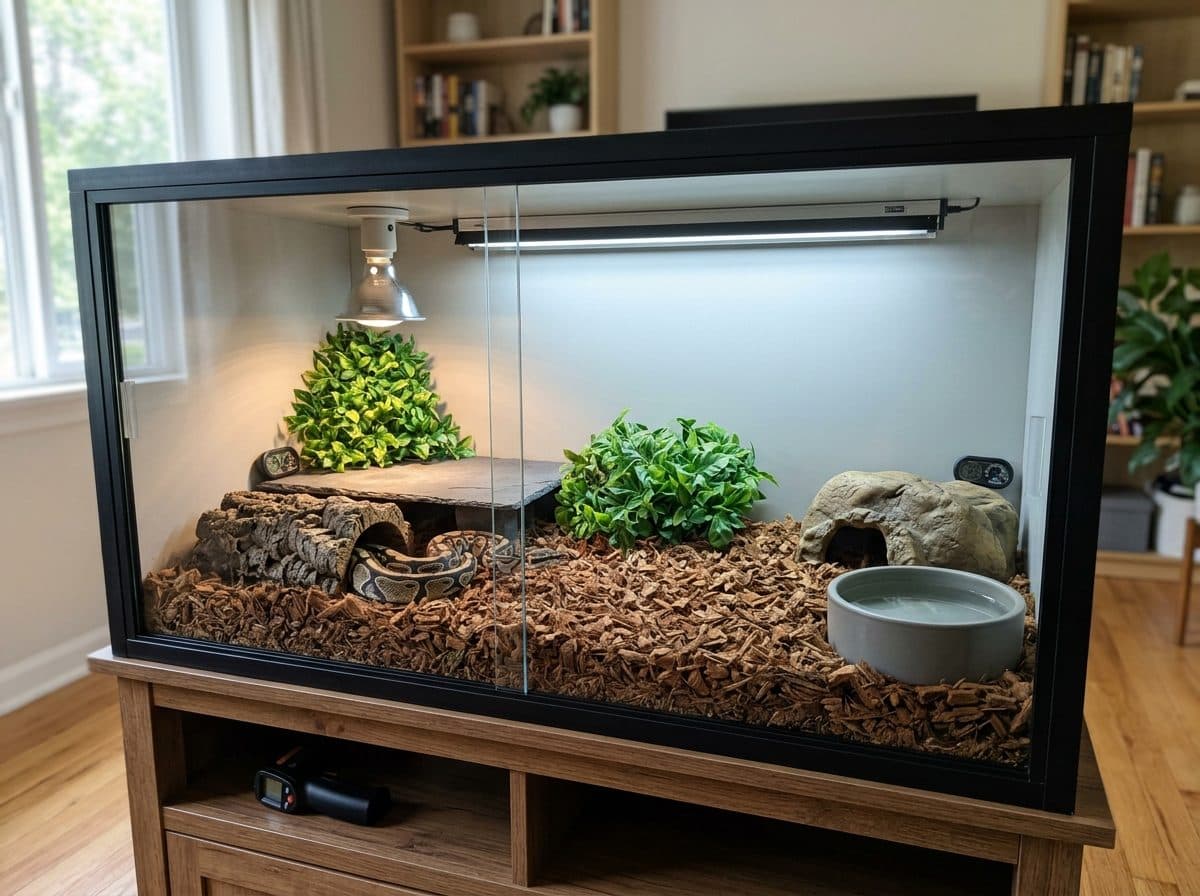
Enclosure size
Adult minimum: 48 × 24 × 24 in (4 × 2 × 2 ft). Front-opening PVC or sealed wood terrarium, horizontal layout.
Hatchlings and young juveniles can start in a smaller 20-36 inch enclosure or tub, or go directly into an adult 4x2x2 foot terrarium if provided with dense cover and multiple snug hides.
Ball pythons are solitary creatures and must always be housed individually to prevent stress, food competition, and cohabitation injuries.
Adult size: 3.5-5 ft (105-150 cm) total length. Lifespan: 20–30 years. Difficulty: beginner. Tolerates brief handling; about 5–10 minutes of care a day.
Temperature & humidity
| Basking surface | 88–92°F |
| Warm side | 86–90°F |
| Cool side | 75–80°F |
| Night | 72–78°F |
| Humidity | 60–80% |
Maintain high humidity by pouring water into the bottom substrate corners rather than spraying surfaces wet, which prevents scale rot. Temperatures should never drop below 70°F anywhere in the enclosure.
Lighting & heat
UVB: Linear T5 HO Ferguson Zone 1-2 (2-6% UVB) bulb spanning 1/2 of enclosure length
Heat: Halogen flood lamp or deep heat projector (DHP) controlled by a dimming thermostat
Day length: 12 hours on, 12 hours off hours
Substrate & diet
Good choices: coconut husk chips; cypress mulch; topsoil and coco coir mix; sphagnum moss.
Avoid: cedar shavings; pine shavings; aspen shavings; calcium sand; reptile carpet.
Diet: Obligate carnivore fed appropriately sized thawed frozen rodents (rats or mice) matching 1.0-1.25x the widest girth of the snake. Feed juveniles every 7-10 days and mature adults every 2-4 weeks.
Ball Python setup checklist
Everything for a complete adult setup. Essentials are ticked; untick anything you already have.
What a Ball Python costs to keep
- Setup (essentials)
- $491–$890
- Every year after
- $135–$305
- First year, all in
- $626–$1,195
| Ongoing | How often | Per year |
|---|---|---|
| Frozen-thawed rodentsBall pythons require appropriately sized frozen rats or mice as their complete dietary staple. | every 2-4 weeks | $40–$120 |
| Coconut husk substrateFull substrate replacements are necessary to maintain hygiene and assist with proper enclosure humidity. | every 2-3 months | $50–$100 |
| Linear T5 UVB bulb replacementUVB output degrades over time despite emitting visible light and must be replaced to provide therapeutic benefits. | every 12 months | $25–$45 |
| Veterinary disinfectantRoutine sanitation of the enclosure, hides, and water bowl prevents bacterial and fungal overgrowth. | every 6-12 months | $20–$40 |
Typical US prices. Vet care isn't included: budget for a check-up with an exotics vet after you bring your pet home, and keep an emergency fund.
Before your ball python comes home
2-4 weeks before
Assemble the enclosure with substrate, hides, water bowl, heating and lighting
Substrate and decor change temperatures and humidity, so they must be in place before you test.
1 week before
Run heat on the dimming thermostat and verify the thermal gradient and humidity with the enclosure empty
Testing temperature and humidity parameters without the animal prevents life-threatening overheating or chilling.
day one
Gently transfer snake into the enclosure and secure all doors
Minimizes initial stress and prevents accidental escape while the snake settles in.
first two weeks
Leave the snake completely alone except for changing water and spot cleaning
Avoiding handling allows the snake to feel secure enough to establish a reliable feeding response.
2-4 weeks after arrival
Schedule a baseline health exam with an exotics veterinarian
A professional health screen ensures the snake is parasite-free and recovering well from transition stress.
Common setup mistakes
- Using open screen-top glass aquariums that vent away all essential humidity and heat.
- Using dangerous heat rocks or unregulated heat mats that can burn the snake's belly.
- Keeping substrate damp on top, which leads directly to bacterial skin infections and scale rot.
- Providing oversized hides or only one hide, leaving the snake insecure and prone to hunger strikes.
- Overfeeding adult snakes or attempting to feed live prey unnecessarily, which can inflict serious bites on the snake.
Before you buy: Snakes, including ball pythons, are illegal to keep in Hawaii. Elsewhere, check state and municipal regulations, as some cities restrict keeping non-native constrictor snakes.
Questions people ask
What size tank does an adult ball python need?
Modern standard care guidelines require a minimum 48x24x24 inch (4x2x2 feet) front-opening enclosure for an adult ball python. This permits a proper thermal gradient, space to stretch out fully, and adequate height for enrichment branches.
What temperature and humidity are required?
Maintain a warm hide of 86-90°F with a basking surface of 88-92°F, and a cool side of 75-80°F. Relative humidity should remain consistently between 60% and 80% throughout the enclosure.
How much does a full ball python setup cost?
A proper setup including a 4x2x2 foot PVC enclosure, dimming thermostat, heating, linear UVB light, deep substrate, hides, decor, and basic supplies typically costs between $490 and $890 total.
Sources
The numbers on this page come from these care sheets and references, checked October 2026. How we make these guides.