Reptiles · Pogona vitticeps
Bearded Dragon Enclosure Setup
Bearded dragons are popular, highly personable diurnal lizards native to arid inland Australia. They require high heat, strong linear desert UVB lighting, and significant space to thrive in captivity. While friendly and interactive, their equipment requirements and diet make them a moderate-commitment pet.
- Minimum enclosure (adult)
- 48×24×24 in
- Basking spot
- 105–115°F
- Humidity
- 30–40%
- Essentials cost
- $488–$814
The setup at a glance
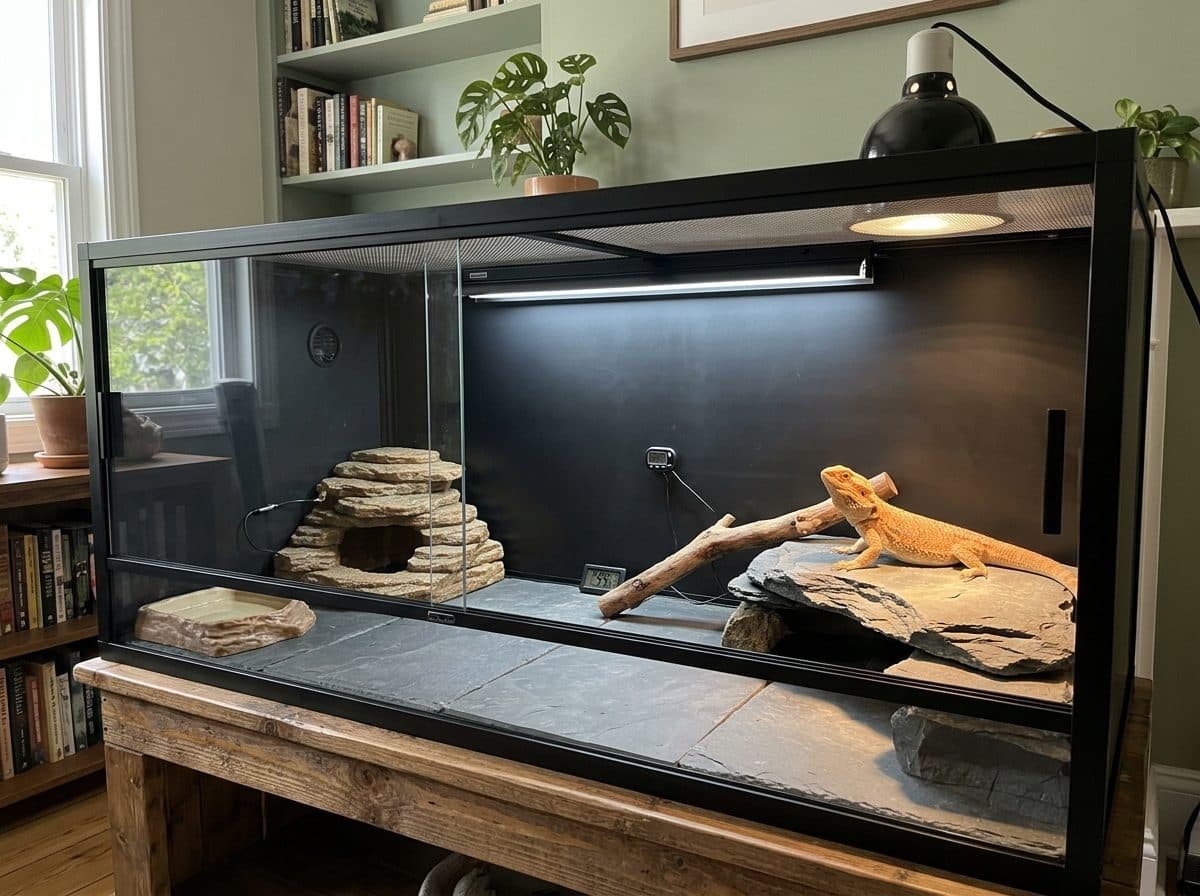
Enclosure size
Adult minimum: 48 × 24 × 24 in (4 × 2 × 2 ft). Front-opening PVC or glass terrarium with screen top, horizontal layout.
Juveniles can start directly in a adult 4x2x2 ft enclosure if provided with sufficient hides and decor to feel safe.
Bearded dragons are solitary animals and must be housed individually to prevent territorial fights and severe injuries.
Adult size: 18-24 in (45-60 cm) nose to tail. Lifespan: 10–15 years. Difficulty: intermediate. Tolerates brief handling; about 15–30 minutes of care a day.
Temperature & humidity
| Basking surface | 105–115°F |
| Warm side | 85–95°F |
| Cool side | 75–85°F |
| Night | 65–75°F |
| Humidity | 30–40% |
Basking surface temperatures must be measured with an infrared temp gun rather than ambient wall thermometers. Maintain a distinct warm-to-cool thermal gradient.
Lighting & heat
UVB: T5 HO 10-12% linear desert bulb spanning 1/2 to 2/3 of enclosure length
Heat: Halogen flood heat lamp on top dome fixture; ceramic heat emitter optional for cold nights
Day length: 12-14 on hours
Substrate & diet
Good choices: paper towels; slate tile; 50/50 organic topsoil and play sand mixture.
Avoid: calcium sand; crushed walnut shells; reptile carpet; wood shavings.
Diet: Juveniles eat 70-80% gut-loaded feeder insects and 20-30% leafy greens daily. Adults flip this ratio, eating 70-80% fresh leafy greens and vegetables with 20-30% feeder insects 2-3 times per week.
Bearded Dragon setup checklist
Everything for a complete adult setup. Essentials are ticked; untick anything you already have.
What a Bearded Dragon costs to keep
- Setup (essentials)
- $488–$814
- Every year after
- $340–$850
- First year, all in
- $828–$1,664
| Ongoing | How often | Per year |
|---|---|---|
| Live feeder insectsBearded dragons require a steady supply of gut-loaded, live insects like dubia roaches or crickets for essential protein. | weekly | $150–$400 |
| Fresh greens and vegetablesDaily fresh salads using staple leafy greens and veggies provide necessary hydration, vitamins, and fiber. | weekly | $100–$250 |
| T5 HO UVB tube bulbLinear T5 UVB output degrades over time even if visible light remains, requiring replacement to prevent metabolic bone disease. | every 12 months | $30–$60 |
| Heat bulbs and spare lampsHalogen flood heat bulbs burn out periodically and require timely replacement to maintain safe basking temperatures. | every 6-12 months | $20–$50 |
| Calcium and multivitamin supplementsDietary powders degrade once opened and are critical for preventing nutritional deficiencies and metabolic bone disease. | every 6 months | $20–$40 |
| Paper towels or non-adhesive linerConsumable paper substrates or liners require regular replacement to maintain a hygienic, easily spot-cleaned enclosure. | monthly | $20–$50 |
Typical US prices. Vet care isn't included: budget for a check-up with an exotics vet after you bring your pet home, and keep an emergency fund.
Before your bearded dragon comes home
2 weeks before
Assemble the enclosure and install all heating and UVB lighting fixtures
Setting up the habitat early ensures all equipment is functioning properly and mounted at correct safety distances.
48 hours before
Run heat lamps and UVB continuously on their intended timer schedule while taking infrared surface temperatures
Testing thermal gradients and basking spots without the animal present allows you to dial in safe temperatures and avoid overheating or hypothermia.
Day one
Gently place the bearded dragon directly into the pre-heated enclosure and offer fresh water
Minimizing transport stress and immediate handling helps the reptile acclimate quickly to its new environment.
First two weeks
Provide daily food and spot clean without attempting to handle or remove the animal from the enclosure
A zero-handling relocation period reduces stress, prevents hunger strikes, and allows the reptile to establish a safe territory.
First month
Schedule a baseline health exam and fecal test with an experienced exotics veterinarian
Early veterinary screening detects common parasites or hidden health issues before severe symptoms develop.
Common setup mistakes
- Using compact coil UVB light bulbs instead of high-output linear T5 tube lights.
- Using electric heat rocks, which frequently malfunction and cause severe thermal burns.
- Housing juvenile or adult dragons in small 20-gallon or 40-gallon aquariums long-term.
- Using calcium sand or dyed sand substrate which poses impaction risks if ingested.
- Relying on analog dial thermometers stuck to enclosure glass rather than digital probes and temp guns.
Before you buy: Bearded dragons are legal in most of the US, but Hawaii prohibits private possession; check local rules elsewhere.
Questions people ask
What size tank does an adult bearded dragon need?
An adult bearded dragon requires a minimum enclosure size of 48 x 24 x 24 inches (120 gallons). Smaller tanks do not allow for a proper heat gradient or adequate movement space.
What temperature should a bearded dragon basking spot be?
The surface temperature of the basking rock should sit between 105°F and 115°F (ideally 108-113°F), measured with an infrared temp gun.
How much does it cost to set up a bearded dragon habitat?
Expect to spend between $490 and $820 upfront for a proper 120-gallon enclosure, high-output linear UVB lighting, heat fixtures, decor, and basic monitoring tools.
Sources
The numbers on this page come from these care sheets and references, checked October 2026. How we make these guides.