Reptiles · Pantherophis guttatus
Corn Snake Enclosure Setup
Corn snakes are docile, hardy, and highly active colubrids that make fantastic pet snakes for keepers of all experience levels. Modern husbandry standardizes a minimum 4x2x2 ft enclosure with a proper thermal gradient, low-level linear UVB, and ample security through hides and secure locks. While legacy care recommended 30-40 gallon tanks, modern reptile welfare standards emphasize giving these active snakes enough space to stretch fully and climb.
- Minimum enclosure (adult)
- 48×24×24 in
- Basking spot
- 88–92°F
- Humidity
- 40–60%
- Essentials cost
- $464–$754
The setup at a glance
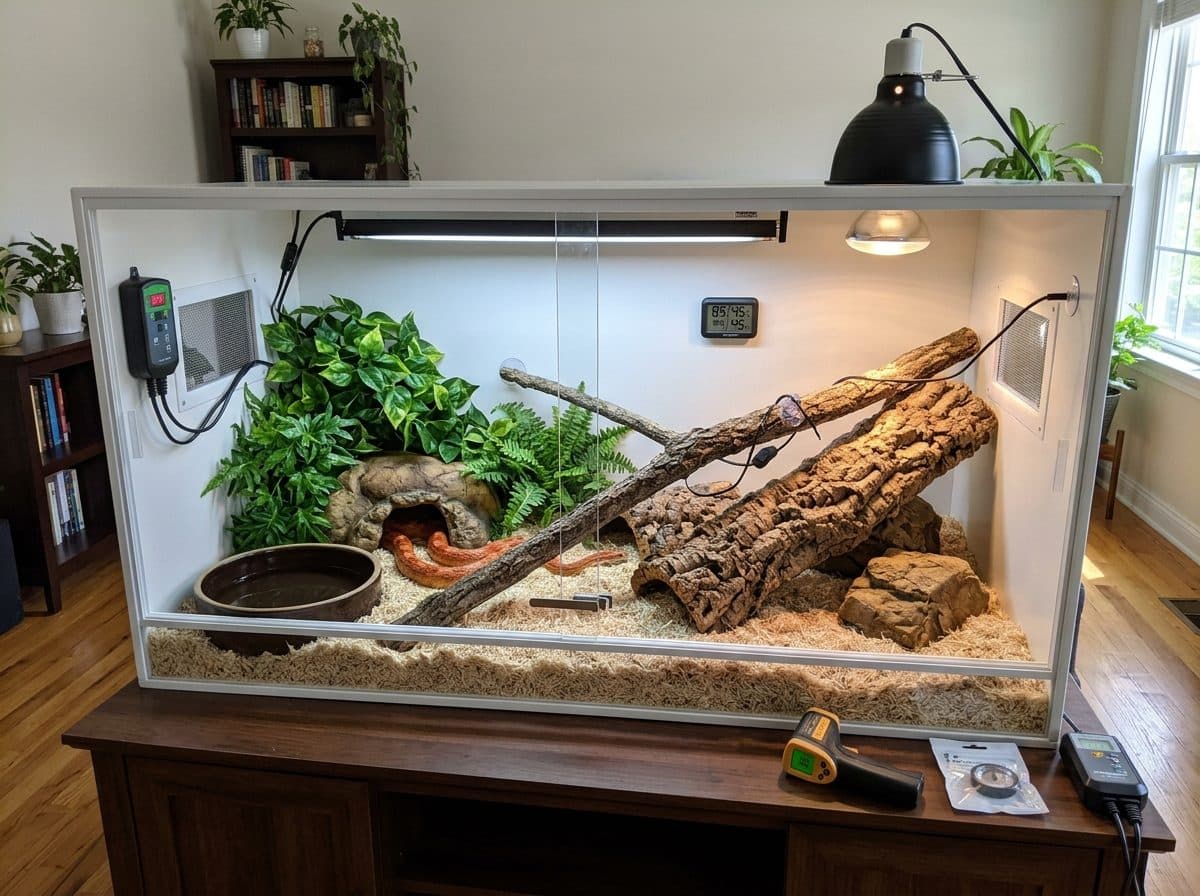
Enclosure size
Adult minimum: 48 × 24 × 24 in (4 × 2 × 2 ft). Front-opening glass or PVC terrarium, horizontal layout.
Hatchlings can start in a smaller 10-20 gallon long enclosure or tub to easily monitor feeding and prevent escapes, but can move straight to an adult enclosure if provided with abundant hides and coverage.
Corn snakes are strictly solitary animals and must always be housed individually to prevent stress or fatal cannibalism.
Adult size: 36-60 in (90-150 cm) nose to tail. Lifespan: 15–25 years. Difficulty: beginner. Tolerates brief handling; about 5–10 minutes of care a day.
Temperature & humidity
| Basking surface | 88–92°F |
| Warm side | 82–85°F |
| Cool side | 75–78°F |
| Night | 68–75°F |
| Humidity | 40–60% |
Provide a continuous thermal gradient across the length of the enclosure. Humidity should average 40-60%, with a humid hide filled with damp sphagnum moss provided during shedding cycles.
Lighting & heat
UVB: T5 HO 5-6% linear tube (UVI 2.0-3.0 at the basking spot) covering 1/2 of enclosure
Heat: Overhead halogen flood lamp or ceramic heat emitter connected to a dimming thermostat
Day length: 12-14 on hours
Substrate & diet
Good choices: Aspen shavings; Coconut husk blend; Organic topsoil and play sand mix.
Avoid: Cedar shavings; Pine shavings; Calcium sand; Aromatic wood chips.
Diet: Strict carnivores fed appropriately sized frozen-thawed mice (width matching 1 to 1.5 times the thickest part of the snake's body) every 7-14 days depending on age.
Corn Snake setup checklist
Everything for a complete adult setup. Essentials are ticked; untick anything you already have.
What a Corn Snake costs to keep
- Setup (essentials)
- $464–$754
- Every year after
- $105–$220
- First year, all in
- $569–$974
| Ongoing | How often | Per year |
|---|---|---|
| Frozen-thawed miceCorn snakes are obligate carnivores that require appropriately sized frozen-thawed rodents for complete nutrition. | every 7-14 days | $40–$90 |
| Aspen substrateRegular full substrate changes prevent bacterial growth and maintain clean, dry burrowing material. | every 3-4 months | $30–$60 |
| T5 HO UVB linear tubeUVB lamps degrade over time and stop emitting sufficient ultraviolet light long before the visible light burns out. | every 12 months | $25–$45 |
| Halogen flood bulbOverhead heat bulbs degrade or blow out over time and require routine replacement to maintain proper basking temperatures. | every 6-12 months | $10–$25 |
Typical US prices. Vet care isn't included: budget for a check-up with an exotics vet after you bring your pet home, and keep an emergency fund.
Before your corn snake comes home
1-2 weeks before
Assemble the enclosure, hides, substrate, and heating and lighting equipment.
Setting up well in advance ensures all hardware functions properly before the snake arrives.
48 hours before
Run heat lamps and UVB on thermostats/timers to establish a stable thermal gradient.
Testing temperature zones with an infrared temp gun ensures you fix dangerous heat spikes or drops while the animal is absent.
Day one
Place the snake directly into a secure warm hide and close the enclosure securely.
Minimizing baseline stress upon arrival reduces the risk of defensive behavior, regurgitation, or escape.
First 7-14 days
Leave the snake completely alone except for changing water and spot cleaning, avoiding all handling.
Giving the snake uninterrupted time to acclimate to its environment prevents stress-induced anorexia.
After initial acclimation
Offer the first frozen-thawed mouse in the enclosure and confirm successful feeding before initiating handling.
Establishing a reliable feeding response confirms the snake is settling in comfortably.
Within first month
Schedule a routine initial wellness exam and fecal parasite check with an experienced exotics veterinarian.
Early health screening detects internal parasites or underlying issues before severe symptoms develop.
Common setup mistakes
- Underestimating enclosure size; modern standards require a minimum 4x2x2 ft setup for adult snakes to stretch and exercise.
- Failing to secure the enclosure, leading to escapes through tiny gaps or unlocked lids.
- Using uncalibrated heat mats or lamps without a thermostat, creating severe burn and fire hazards.
- Using toxic wood substrates like cedar or pine, which cause fatal respiratory damage.
- Handling the snake within 48 hours of feeding, causing regurgitation and severe stress.
Before you buy: Corn snakes are native to Georgia, where state law generally prohibits keeping them as pets, and all snakes are illegal to keep in Hawaii. Check state and local wildlife regulations before acquiring one.
Questions people ask
What size tank does an adult corn snake need?
While older care sheets suggested 30-40 gallon tanks, modern veterinary and modern care guidelines recommend a minimum 4x2x2 foot (120 gallon equivalent) enclosure for adult corn snakes to allow full horizontal stretching and semi-arboreal climbing.
What temperatures and humidity do corn snakes require?
Provide a temperature gradient with a basking spot of 88–92°F, a warm side of 82–85°F, and a cool side around 75–78°F. Maintain humidity between 40–60%, boosting it with a damp moss hide when shedding.
What supplies do I need to buy for a corn snake setup?
You need a secure front-opening enclosure (with locks), overhead heat bulb with a dimming thermostat, linear T5 UVB light, substrate, two secure hides, a sturdy water bowl, climbing decor, digital thermohygrometers, and feeding tongs.
How much does a full corn snake setup cost?
A proper initial setup typically costs between $460 and $760, including a quality 4x2x2 enclosure, proper safety thermostats, light fixtures, and essential supplies.
Sources
The numbers on this page come from these care sheets and references, checked October 2026. How we make these guides.