Small Mammals · Chinchilla lanigera
Chinchilla Cage Setup
Chinchillas are energetic, long-lived, crepuscular rodents that require vertical space for jumping and active climbing. Their extremely dense fur makes them exceptionally vulnerable to overheating, requiring strict climate control below 75°F at all times. Proper setup demands a tall multi-level wire cage with solid surfaces, safe chewables, and routine dust baths instead of water.
- Minimum cage (adult)
- 36×24×48 in
- Temperature
- Room temp
- Humidity
- 30–50%
- Essentials cost
- $408–$810
The setup at a glance
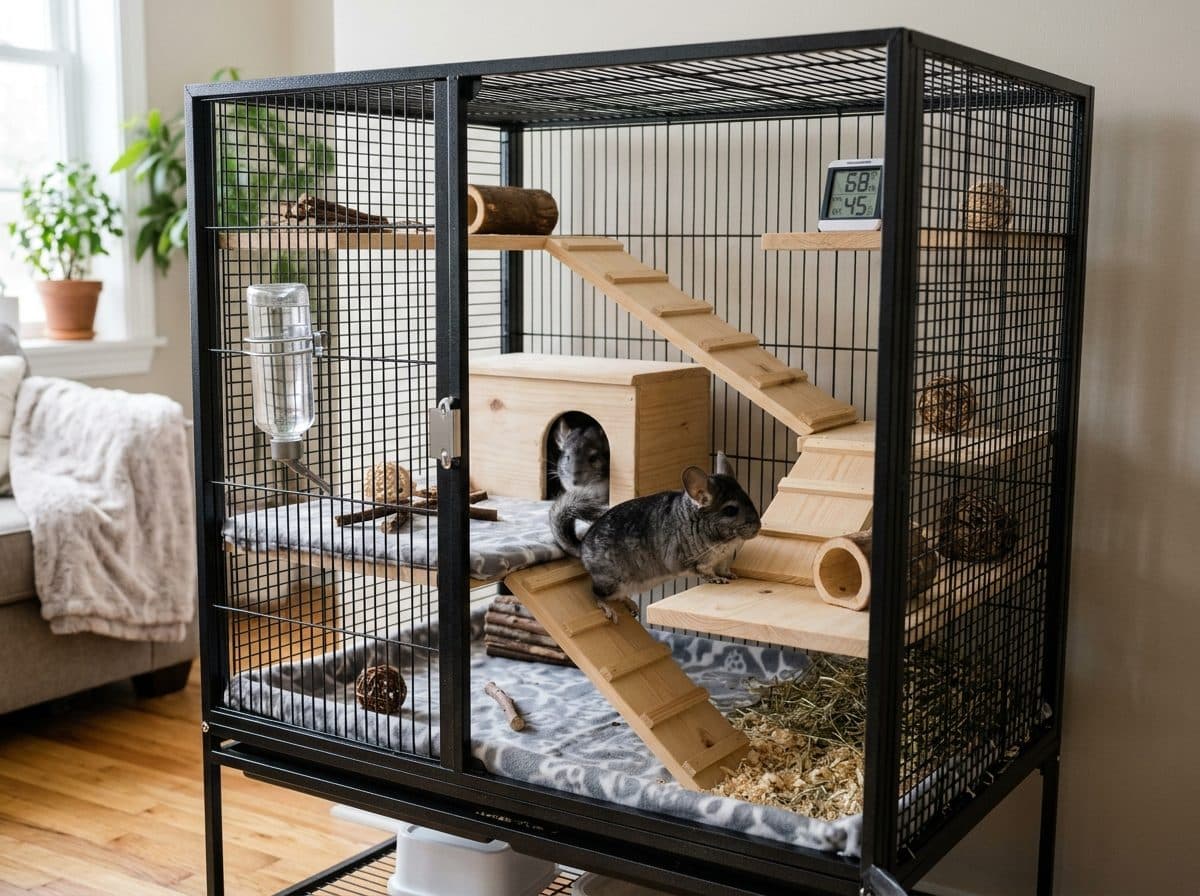
Cage size
Adult minimum: 36 × 24 × 48 in (3 × 2 × 4 ft). Multi-level wire cage with solid floor, vertical layout.
Young chinchillas require narrow bar spacing (1/2 inch or less) to prevent escapes and lower shelf levels to minimize fall risk.
Bonded pairs or same-sex groups require larger cages with multiple hides and feeding stations to prevent territorial aggression.
Adult size: 10-15 in (25-38 cm) body length plus 5-6 in tail. Lifespan: 10–20 years. Difficulty: intermediate. Tolerates brief handling; about 15–30 minutes of care a day.
Temperature & humidity
| Humidity | 30–50% |
Ambient room temperature must remain between 60°F and 70°F (15°C–21°C). Temperatures above 75°F (24°C) with high humidity can trigger fatal heatstroke.
Lighting & heat
UVB: not required
Heat: none (heat sources are dangerous; air conditioning or cooling tiles are required)
Day length: 12-14 hours natural room light cycle hours
Substrate & diet
Good choices: washable fleece cage liners; kiln-dried aspen shavings; paper-based bedding.
Avoid: exposed wire flooring; cedar shavings; un-kiln-dried pine shavings; clumping cat litter.
Diet: Unlimited high-quality timothy or orchard grass hay supplemented daily with 1-2 tablespoons of plain, high-fiber chinchilla pellets. Clean water must be provided via a chew-proof glass bottle.
Chinchilla setup checklist
Everything for a complete adult setup. Essentials are ticked; untick anything you already have.
- $180–$350Amazon ↗
- $12–$25Amazon ↗
- $15–$30Amazon ↗
- $10–$20Amazon ↗
- $10–$18Amazon ↗
- $8–$15Amazon ↗
- $10–$20Amazon ↗
- $15–$35Amazon ↗
- $10–$20Amazon ↗
- $25–$50Amazon ↗
- $18–$35Amazon ↗
- $12–$25Amazon ↗
- $12–$22Amazon ↗
- $10–$20Amazon ↗
- $60–$120Amazon ↗
14 items: $408–$810Typical US retail ranges, not live prices. Untick what you already have.
What a Chinchilla costs to keep
- Setup (essentials)
- $408–$810
- Every year after
- $185–$420
- First year, all in
- $593–$1,230
| Ongoing | How often | Per year |
|---|---|---|
| Timothy or orchard grass hayHay constitutes the vast majority of a chinchilla's daily diet and must be continually replenished. | monthly | $60–$120 |
| Plain chinchilla pelletsPellets are fed in small daily quantities to provide balanced daily nutrition. | monthly | $30–$60 |
| Paper bedding or fleece linersBedding is spot-cleaned daily and fully changed weekly; washable fleece wears out from laundering and chewing. | weekly changes; replace fleece every 6-12 months | $30–$100 |
| Volcanic bath dustChinchillas require regular dust baths to clean their dense fur and remove skin oils. | every 2-3 months | $25–$50 |
| Safe wood chew toysChinchilla teeth grow continuously and require non-toxic wood toys to prevent dangerous dental overgrown. | monthly | $40–$90 |
Typical US prices. Vet care isn't included: budget for a check-up with an exotics vet after you bring your pet home, and keep an emergency fund.
Before your chinchilla comes home
1-2 weeks before
Assemble the cage and verify ambient room temperatures
Chinchillas are highly prone to fatal heatstroke, so you must confirm the room consistently stays below 70°F (21°C) before arrival.
48 hours before
Set up fleece liners, hideouts, hay rack, and dust bath
Having all interior accessories completely secured and clean prevents unnecessary stress and disturbance when the animal arrives.
day one
Place the chinchilla directly into the cage with fresh hay and water
Immediate quiet access to food, water, and shelter reduces transit-induced stress and helps prevent digestive distress.
first two weeks
Leave the chinchilla alone except for daily feeding and spot cleaning
Chinchillas are easily stressed prey animals that need an extended settling period without handling to adapt safely to new environments.
first month
Schedule an initial wellness exam with a qualified exotics veterinarian
An early exotic vet checkup establishes a health baseline and detects subtle dental or digestive issues early.
Common setup mistakes
- Using wire-mesh flooring or wire shelves, which cause painful foot sores (bumblefoot) and broken limbs.
- Exposing the animal to room temperatures over 75°F or high humidity, leading to rapid, fatal heatstroke.
- Bathing the chinchilla in water, which traps moisture in their dense coat and breeds severe skin fungus.
- Including plastic items, hides, or trays that the animal can chew and swallow, causing intestinal blockages.
- Feeding seed mixes, sugary treats, or fruit, which disrupts their delicate cecal digestive system.
Before you buy: Chinchillas are generally legal across the United States, though local municipal exotic pet ordinances or landlord lease agreements may impose restrictions.
Questions people ask
What size cage does a chinchilla need?
A single adult chinchilla needs a multi-level wire cage measuring at least 36 x 24 x 48 inches (LxWxH) with solid flooring. Vertical height is essential because chinchillas are active jumpers that love climbing.
What temperature range is safe for a chinchilla?
The ideal room temperature is between 60°F and 70°F (15°C–21°C). Temperatures above 75°F (24°C) are dangerous, and ambient temperatures exceeding 80°F can easily cause fatal heatstroke.
What basic supplies do I need for a chinchilla setup?
You need a tall multi-level cage, solid wooden ledges, fleece liners, a chew-proof glass water bottle, a heavy ceramic food dish, a metal hay rack, unlimited timothy hay, plain chinchilla pellets, safe wooden chews, a hide box, a granite cooling stone, and volcanic bath dust with a bath container.
How much does a full chinchilla setup cost?
Initial setup costs typically range between $400 and $810 USD, which includes a quality multi-level cage ($180–$350), fleece liners, wooden ledges, dust bath supplies, hay, pellets, and feeding accessories.
Sources
The numbers on this page come from these care sheets and references, checked October 2026. How we make these guides.