Small Mammals · Oryctolagus cuniculus
Rabbit Cage Setup
Domestic rabbits are intelligent, highly social pets that require far more space than traditional pet store cages provide. They thrive in indoor exercise pens or puppy pens with plenty of daily exercise and litter box training. A proper setup requires non-slip solid flooring, unlimited grass hay, hideouts, and chew enrichment to prevent dental and digestive issues.
- Minimum cage (adult)
- 48×48×36 in
- Temperature
- Room temp
- Humidity
- 30–70%
- Essentials cost
- $178–$378
The setup at a glance
Cage size
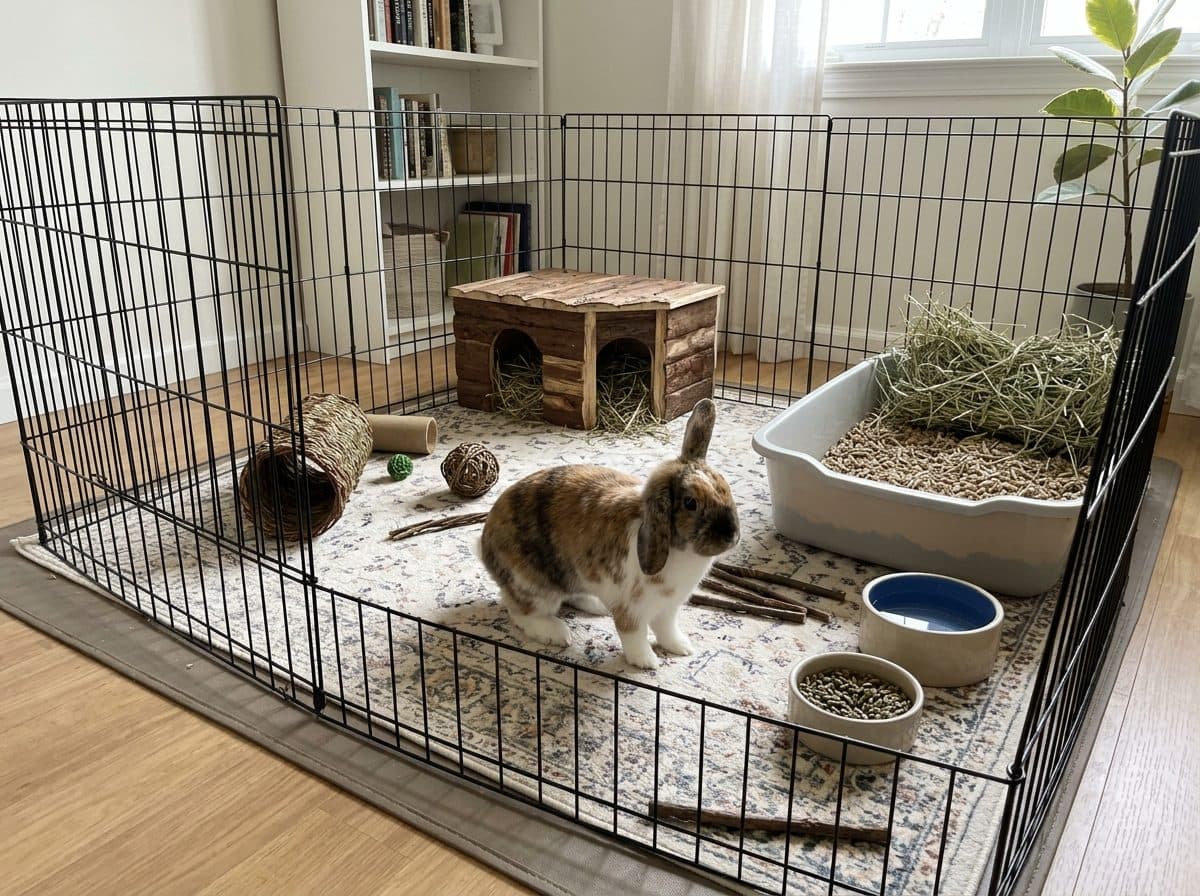
Adult minimum: 48 × 48 × 36 in (4 × 4 × 3 ft). Indoor exercise pen or free-roam area with solid flooring, horizontal layout.
Juveniles need pens with bar spacing smaller than 1 inch or solid panel borders to prevent escape.
Rabbits are best kept in spayed or neutered bonded pairs, requiring at least 16 to 32 square feet of continuous enclosure space.
Adult size: 12-20 in (30-50 cm) body length. Lifespan: 8–12 years. Difficulty: intermediate. Tolerates brief handling; about 30–60 minutes of care a day.
Temperature & humidity
| Humidity | 30–70% |
Rabbits thrive at standard room temperatures between 60°F and 75°F. They are susceptible to dangerous heatstroke at ambient temperatures above 80°F.
Lighting & heat
UVB: not required
Heat: none
Day length: 12-14 on hours
Substrate & diet
Good choices: paper-based pellet litter (for litter box); compressed pine pellets (for litter box); fleece blankets; washable low-pile rugs.
Avoid: wire mesh flooring; clumping clay cat litter; cedar wood shavings; untreated pine shavings.
Diet: A healthy rabbit diet consists of 85% unlimited grass hay (such as Timothy or orchard grass), fresh leafy green vegetables daily, and a small measured amount of plain high-fiber pellets. Clean fresh water must always be accessible in a heavy ceramic bowl.
Rabbit setup checklist
Everything for a complete adult setup. Essentials are ticked; untick anything you already have.
What a Rabbit costs to keep
- Setup (essentials)
- $178–$378
- Every year after
- $470–$1,060
- First year, all in
- $648–$1,438
| Ongoing | How often | Per year |
|---|---|---|
| Timothy or grass hayGrass hay forms 85% of a rabbit's diet; one rabbit eats roughly 5-10 lb a month, and bagged pet-store hay costs far more per pound than bulk bales. | monthly | $150–$400 |
| Paper pellet litterLitter boxes require frequent changing to control ammonia levels and maintain sanitary conditions. | monthly | $100–$200 |
| Fresh leafy greensDaily fresh greens provide essential hydration, vitamins, and dietary variety alongside hay. | weekly | $150–$300 |
| High-fiber Timothy pelletsPellets are fed in small, measured quantities daily to ensure balanced trace nutrient intake. | every 2-3 months | $30–$60 |
| Chew toys and hidesRabbits continuously chew paper, cardboard, and untreated wood toys to keep their open-rooted teeth worn down. | every 1-2 months | $40–$100 |
Typical US prices. Vet care isn't included: budget for a check-up with an exotics vet after you bring your pet home, and keep an emergency fund.
Before your rabbit comes home
1-2 weeks before
Set up pen, flooring, and litter box
Assembling the pen, securing protective flooring, and setting up feeding stations ensures a safe environment free of chew hazards.
48 hours before
Rabbit-proof surrounding room and check space
Securing electrical cords and removing toxic houseplants prevents fatal electrocution or poisoning if the rabbit escapes the pen.
Day one
Place rabbit in pen with fresh hay and water, then leave alone
Minimizing stress and providing immediate access to hay prevents fatal gastrointestinal stasis triggered by relocation anxiety.
First 48 hours
Monitor fecal output and appetite closely without handling
Confirming the rabbit is actively eating hay and producing normal round droppings ensures its digestive system remains functional.
First two weeks
Begin low-stress interaction and schedule initial vet check
Sitting quietly nearby builds trust without handling stress, and a baseline exotics vet visit detects underlying health or dental issues.
Common setup mistakes
- Housing rabbits in commercial wire-bottom cages or tiny pet store hutches.
- Using clumping clay cat litter or scented wood shavings that cause respiratory or blockage risks.
- Feeding muesli mix pellets with seeds and nuts instead of high-fiber plain Timothy pellets.
- Failing to provide unlimited grass hay, leading to fatal GI stasis and overgrown teeth.
- Exposing rabbits to ambient temperatures above 80°F without cooling measures.
Before you buy: Rabbits are legal across the United States, but local municipal codes or housing agreements may limit pet numbers or require spay/neuter compliance.
Questions people ask
What size cage or pen does a rabbit need?
Modern rabbit care standards recommend an exercise pen with a footprint of at least 16 square feet (e.g., 4x4 ft) for a single rabbit, along with at least 4 hours of free-roam exercise daily. Traditional cages are far too small and should only serve as open rest areas.
What temperature range is safe for domestic rabbits?
Rabbits thrive best in indoor room temperatures between 60°F and 75°F. They handle cool weather much better than heat; ambient temperatures above 80°F can quickly cause life-threatening heatstroke.
What supplies do I need for a basic rabbit habitat?
You need a 36-inch tall exercise pen, a waterproof non-slip floor mat, a large litter box filled with paper pellets, a heavy ceramic water bowl, a hay rack, unlimited Timothy hay, plain pellets, a wooden hide house, and safe chew toys.
How much does it cost to set up a proper rabbit habitat?
An initial setup with a tall exercise pen, litter pan, ceramic dishes, flooring mat, hides, and basic food supplies typically costs between $170 and $380 USD.
Sources
The numbers on this page come from these care sheets and references, checked October 2026. How we make these guides.