Small Mammals · Rattus norvegicus
Pet Rat Cage Setup
Pet rats are highly intelligent, empathetic, and social rodents that thrive on human interaction and daily enrichment. Their housing must prioritize high ventilation via wire sides to prevent fatal respiratory infections, plenty of vertical climbing space, and solid flooring to prevent foot injuries.
- Minimum cage (adult)
- 30×18×24 in
- Temperature
- Room temp
- Humidity
- 40–60%
- Essentials cost
- $221–$479
The setup at a glance
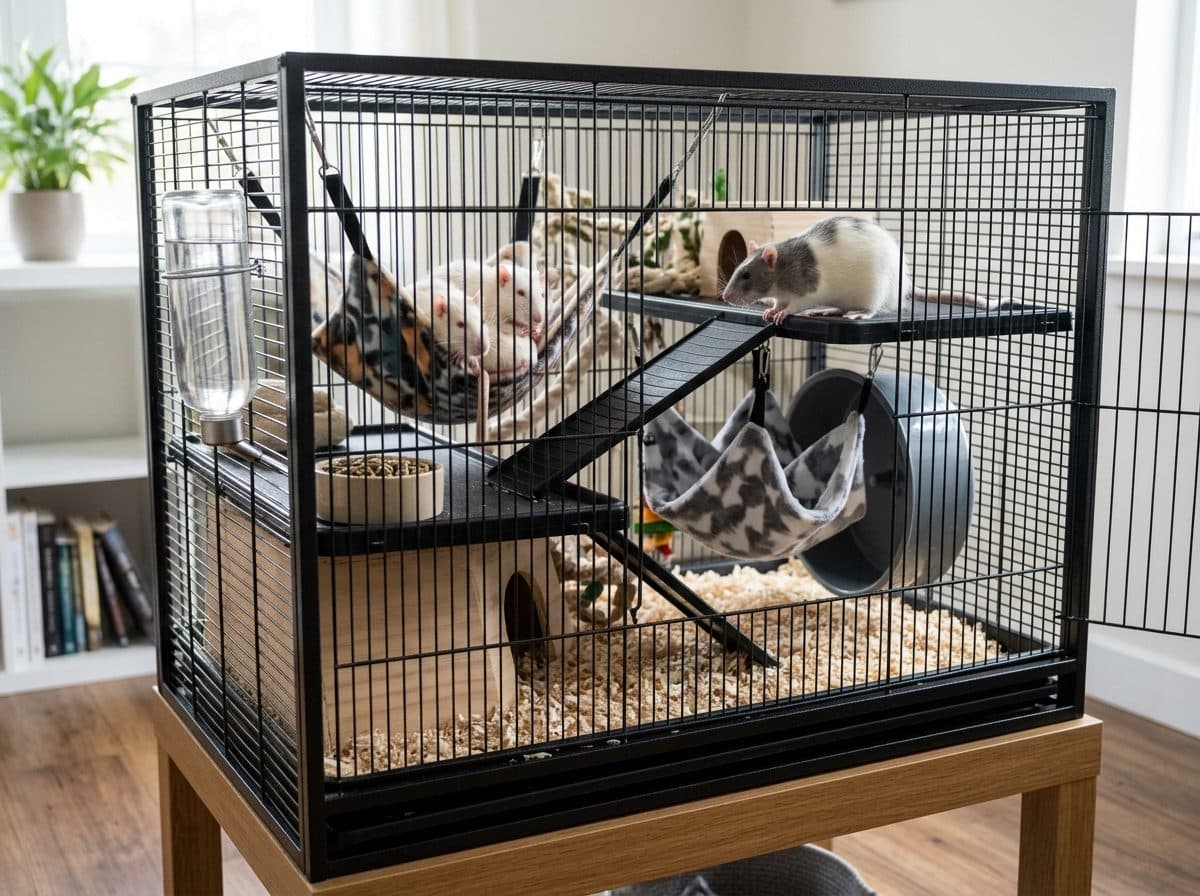
Cage size
Adult minimum: 30 × 18 × 24 in (2.5 × 1.5 × 2 ft). Wire cage with solid floor, vertical layout.
Young rats require narrow bar spacing of 1/2 inch or less to prevent escapes.
Rats are obligate social animals and must be kept in pairs or same-sex groups; increase cage size by at least 20-25% per additional rat.
Adult size: 14-20 in (35-50 cm) nose to tail. Lifespan: 2–3 years. Difficulty: beginner. Enjoys handling; about 60–120 minutes of care a day.
Temperature & humidity
| Humidity | 40–60% |
Rats prefer standard indoor room temperatures between 65°F and 75°F. Avoid direct sunlight, cold drafts, or overheating above 85°F, which can cause lethal heatstroke.
Lighting & heat
UVB: not required
Heat: not required under standard room temperatures
Day length: 12-14 on hours
Substrate & diet
Good choices: kiln-dried aspen shavings; recycled paper bedding; fleece cage liners with absorbent backing; hemp bedding.
Avoid: cedar shavings; un-kiln-dried pine shavings; corn cob bedding; cat litter; scented bedding.
Diet: A nutritionally complete commercial rat block or pellet supplemented daily with small amounts of fresh vegetables, whole grains, and occasional low-sugar fruits or lean protein.
Pet Rat setup checklist
Everything for a complete adult setup. Essentials are ticked; untick anything you already have.
What a Pet Rat costs to keep
- Setup (essentials)
- $221–$479
- Every year after
- $180–$360
- First year, all in
- $401–$839
| Ongoing | How often | Per year |
|---|---|---|
| Commercial Rat PelletsFormulated rodent block serves as the main staple diet and must be replenished consistently. Costs assume a pair. | monthly | $40–$80 |
| Paper or Aspen BeddingSubstrate must be completely removed and replaced regularly to control ammonia buildup and protect respiratory health. | monthly | $60–$120 |
| Fresh Produce and Healthy TreatsSupplemental vegetables, grains, and occasional protein provide vital nutrition and mental enrichment. | weekly | $50–$100 |
| Replacement Hammocks and ChewsRats naturally chew and wear down fabric accessories and wooden enrichment items over time. | every 3-6 months | $30–$60 |
Typical US prices. Vet care isn't included: budget for a check-up with an exotics vet after you bring your pet home, and keep an emergency fund.
Before your pet rat comes home
1 week before
Assemble cage and set up interior accessories
Ensures the cage is secure, bedding is in place, and hides and hammocks are properly installed before arrival.
48 hours before
Verify room temperature and secure the environment
Confirms that the room stays within safe temperatures (65-75°F) and is free of toxic fumes or drafts.
Day one
Place the rats in the cage and allow quiet acclimation
Minimizes severe relocation stress by giving the animal time to explore food, water, and hides undisturbed.
First 48 hours
Observe from a distance and avoid handling
Prevents fear responses and allows the rats to adjust to household sounds and smells safely.
First two weeks
Begin gentle hand-feeding and low-stress taming
Builds trust gradually through positive associations with treats and calm voice interactions.
Within first month
Schedule an initial wellness visit with an exotics veterinarian
Establishes a baseline health record and screens for subtle early signs of respiratory or parasite issues.
Common setup mistakes
- Housing rats in glass aquariums or plastic tanks, which trap ammonia gas and cause chronic upper respiratory infections.
- Keeping a single rat alone; rats are highly social and experience severe stress and depression without same-species companions.
- Using wire-mesh or grid flooring, which causes painful foot sores and infections known as bumblefoot.
- Using cedar or un-kiln-dried pine bedding containing aromatic phenols that damage respiratory tracts.
- Selecting a cage with bar spacing wider than 1/2 inch for young or female rats, allowing quick escapes.
Before you buy: Pet rats are generally legal across the United States, though local municipal bans or landlord regulations may apply.
Questions people ask
Can I keep a pet rat in a glass aquarium tank?
No. Glass tanks lack adequate airflow, causing urine ammonia to build up quickly. This directly triggers severe respiratory illness in rats, which are exceptionally prone to pulmonary disease. Always use a well-ventilated wire cage with a solid base.
What size cage do I need for two pet rats?
A pair of adult rats requires a wire cage measuring at least 30 x 18 x 24 inches, though larger tall cages (e.g., 32 x 20 x 36 inches) with multiple levels are strongly recommended to allow proper climbing and foraging.
How much does it cost to set up a rat habitat?
Initial setup costs typically range from $220 to $480, covering a quality multi-level wire cage ($120-$280), substrates, food, water bottles, hides, and climbing accessories.
Do pet rats need external heat or UVB light?
No. Rats thrive at standard room temperatures (65°F–75°F) and do not require heat lamps, heat mats, or UVB lighting. Standard ambient room lighting is sufficient.
Sources
The numbers on this page come from these care sheets and references, checked October 2026. How we make these guides.