Hamster Cage Setup
Hamsters are nocturnal, highly active rodents that require large unbroken floor space and deep bedding for burrowing to prevent chronic stress. Although widely available, proper care requires providing an upright solid-surface exercise wheel, species-appropriate scatter diet, and strictly solitary housing for Syrian hamsters.
- Minimum cage (adult)
- 40×20×20 in
- Temperature
- Room temp
- Humidity
- 40–60%
- Essentials cost
- $186–$458
The setup at a glance
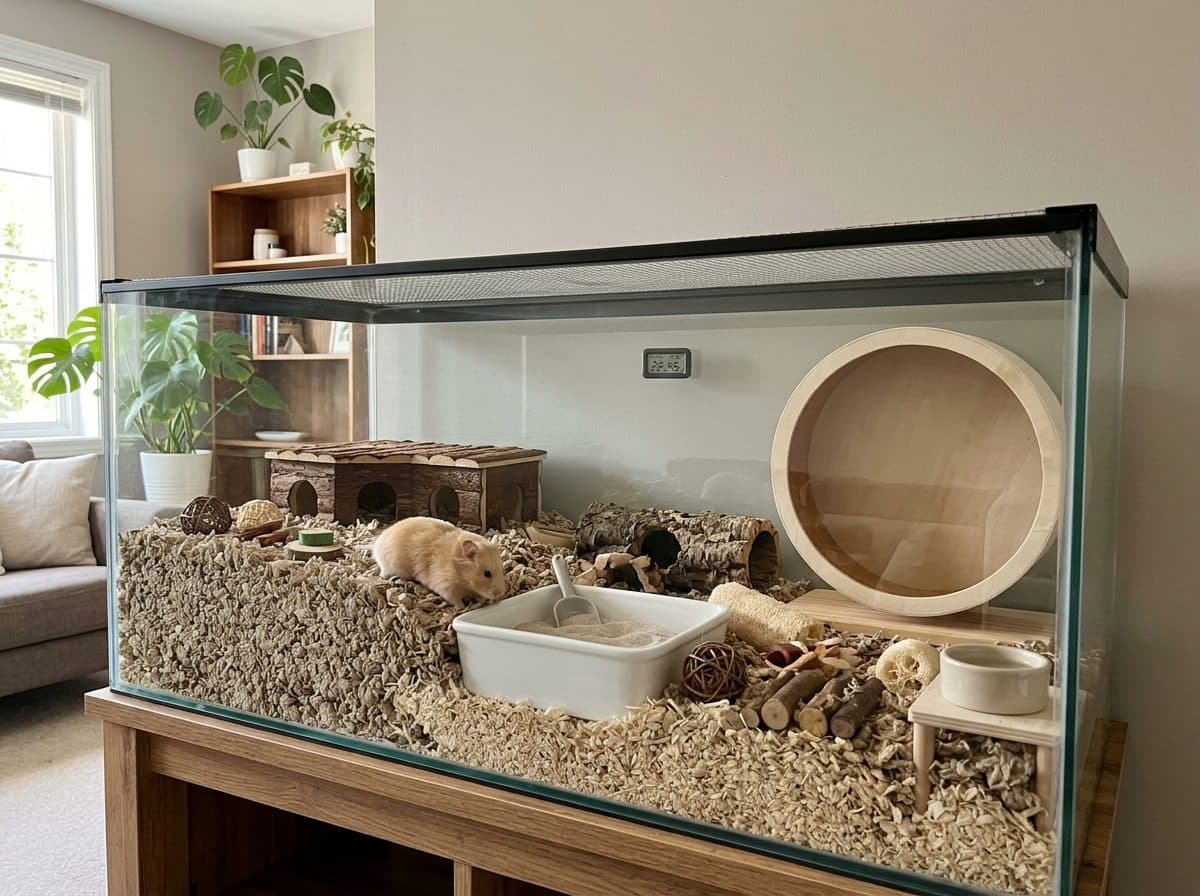
Cage size
Adult minimum: 40 × 20 × 20 in (3.3 × 1.7 × 1.7 ft). Large glass terrarium, wooden enclosure, or modified ventilated bin cage, horizontal layout.
Syrian hamsters are strictly solitary and will fight to the death; dwarf species are also best kept individually in home environments to prevent severe aggression.
Adult size: 2-7 in (5-18 cm) depending on species. Lifespan: 2–3 years. Difficulty: beginner. Tolerates brief handling; about 5–15 minutes of care a day.
Temperature & humidity
| Humidity | 40–60% |
Keep enclosure in a room with stable temperatures between 65°F and 75°F (18°C–24°C). Temperatures below 60°F (15°C) can induce dangerous torpor/pseudo-hibernation, while temperatures above 80°F (27°C) risk fatal heatstroke.
Lighting & heat
UVB: not required
Heat: none; rely on ambient room temperature control
Day length: 12-12 natural day/night ambient light hours
Substrate & diet
Good choices: Unscented paper-based bedding; Aspen wood shavings; Spruce wood shavings.
Avoid: Cedar wood shavings; Unkiln-dried pine shavings; Scented paper bedding; Fluffy cotton or synthetic fiber nesting material; Dusty chinchilla dust or calcium sand.
Diet: Feed a high-quality seed mix alongside complete rodent blocks or pellets, supplemented with tiny portions of fresh vegetables and proteins. Scatter feeding throughout the bedding encourages natural foraging behaviors.
Hamster setup checklist
Everything for a complete adult setup. Essentials are ticked; untick anything you already have.
What a Hamster costs to keep
- Setup (essentials)
- $186–$458
- Every year after
- $125–$255
- First year, all in
- $311–$713
| Ongoing | How often | Per year |
|---|---|---|
| Paper bedding substrateUnscented paper bedding must be partially replaced every 4-6 weeks to maintain hygiene and burrow structure while retaining familiar scent trails. | monthly | $60–$120 |
| Fortified seed mix & lab blocksA staple diet of mixed seeds and block pellets provides daily balanced nutrition and essential tooth wear. | monthly | $30–$60 |
| Calcium-free bathing sandSand baths need regular replenishing as sand becomes soiled or kicked out during natural grooming. | every 2-3 months | $20–$40 |
| Wooden chews & natural hidesHamster incisors grow continuously, requiring fresh wooden chew toys and boredom breakers for ongoing wear and enrichment. | every 3-6 months | $15–$35 |
Typical US prices. Vet care isn't included: budget for a check-up with an exotics vet after you bring your pet home, and keep an emergency fund.
Before your hamster comes home
1-2 weeks before
Assemble enclosure and monitor climate
Setting up the habitat early allows you to verify that ambient room temperatures remain safely between 65°F and 75°F using your digital thermometer.
48 hours before
Fill bedding, hideouts, sand bath, and scatter food
Pre-arranging deep bedding, sand containers, water, and scatter-fed food ensures a fully enriched, stress-free environment the moment the hamster arrives.
Day one
Transfer hamster gently and leave completely alone
Place the hamster directly into the enclosure and avoid intervention so it can explore and adjust without fear or defensive biting.
First 3-7 days
Observe from afar and avoid handling
Refraining from physical contact while changing food and water quietly helps prevent severe stress, illness, or territorial aggression.
First 1-2 weeks
Begin passive scent taming and schedule a health check
Introducing your hand calmly with treats builds trust, while establishing a baseline exam with an exotic veterinarian catches underlying health issues early.
Common setup mistakes
- Buying small pet store wire cages or plastic tube habitats that fall far below the minimum floor space requirement.
- Using wire or mesh exercise wheels, which cause broken limbs, foot injuries, and spine deformation.
- Providing synthetic fluff or cotton bedding, which can entangle limbs or cause lethal intestinal impactions if ingested.
- Housing adult Syrian hamsters together, resulting in territorial aggression and fatal fights.
- Shallow substrate under 6 inches deep, preventing natural burrowing behavior and increasing stress levels.
Before you buy: Hamsters are legal across most of the US, but Hawaii bans all pet hamster species to protect island ecosystems, and California restricts the Chinese hamster (Syrian and Phodopus dwarf hamsters are allowed).
Questions people ask
What size cage does a hamster actually need?
Modern veterinary and welfare standards recommend a minimum of 775 to 1,000 square inches of continuous unbroken floor space (such as a 40" x 20" enclosure or 75-gallon tank). Modular cages connected by tubes do not fulfill floor space needs.
What ambient room temperature should hamsters be kept at?
Keep the room between 65°F and 75°F (18°C–24°C). Below 60°F (15°C), hamsters can fall into a dangerous state of torpor (pseudo-hibernation), while temperatures above 80°F (27°C) cause heatstroke.
How much does a proper beginner hamster setup cost?
A complete, safe hamster setup typically costs between $180 and $460 initial investment for a spacious enclosure, proper bedding, solid wheel, hides, sand bath, and high-quality food.
Sources
The numbers on this page come from these care sheets and references, checked October 2026. How we make these guides.