Reptiles · Tiliqua spp.
Blue-Tongue Skink Enclosure Setup
Blue-tongue skinks are heavy-bodied, docile-tempered omnivorous lizards known for their distinctive blue tongues. They require a large terrestrial enclosure with strong thermal gradients, high UVB lighting, and locality-appropriate humidity levels. A successful setup balances deep substrate for burrowing with secure hides and consistent basking spots.
- Minimum enclosure (adult)
- 72×24×24 in
- Basking spot
- 100–115°F
- Humidity
- 40–80%
- Essentials cost
- $685–$1305
The setup at a glance
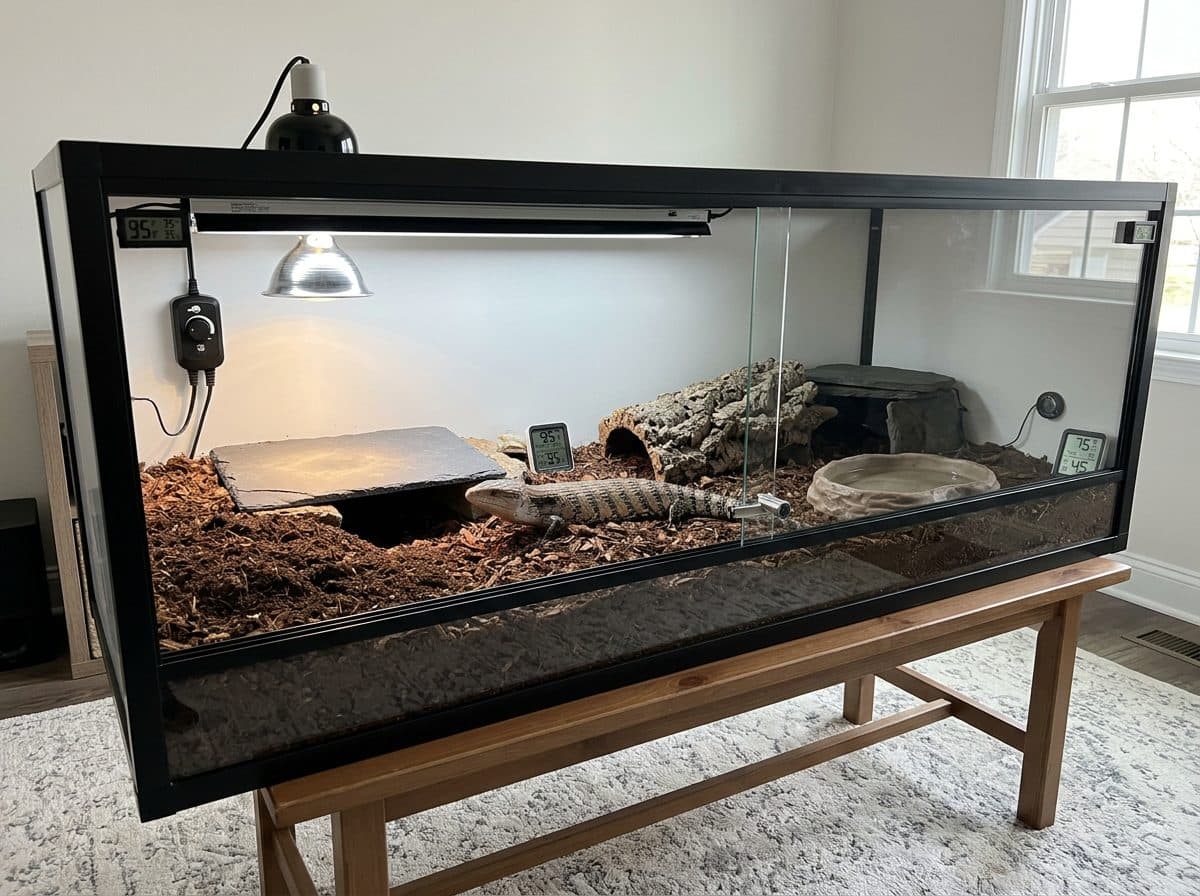
Enclosure size
Adult minimum: 72 × 24 × 24 in (6 × 2 × 2 ft). Front-opening PVC or glass terrarium, horizontal layout.
Juveniles can be raised directly in an adult enclosure provided ample hiding spots and cover are supplied.
House individually; blue-tongue skinks are strictly solitary and aggressive toward cage mates.
Adult size: 18-24 in (45-60 cm) nose to tail. Lifespan: 15–20 years. Difficulty: intermediate. Tolerates brief handling; about 5–15 minutes of care a day.
Temperature & humidity
| Basking surface | 100–115°F |
| Warm side | 85–90°F |
| Cool side | 75–80°F |
| Night | 65–75°F |
| Humidity | 40–80% |
Basking surface: 100-105°F for most species, 105-115°F for Northern and Eastern (T. scincoides). Australian species (Northerns) need 40-60% relative humidity and can drop to 65°F at night, whereas Indonesian species require 60-80% and 70-75°F nights to avoid shedding and respiratory issues.
Lighting & heat
UVB: T5 HO 10-12% linear tube covering 1/2 of the enclosure length
Heat: Halogen heat flood bulb mounted overhead with a dimmer or dimming thermostat
Day length: 12-14 on hours
Substrate & diet
Good choices: Cypress mulch; Organic topsoil and coconut coir blend; Orchid bark; Bioactive soil mix.
Avoid: Calcium sand; Cedar shavings; Pine shavings; Gravel; Recycled paper pellets.
Diet: Omnivorous diet consisting of roughly 50% high-quality protein (canned grain-free dog food, dubia roaches, hornworms), 40% chopped greens/veggies, and 10% fruit.
Blue-Tongue Skink setup checklist
Everything for a complete adult setup. Essentials are ticked; untick anything you already have.
What a Blue-Tongue Skink costs to keep
- Setup (essentials)
- $685–$1,305
- Every year after
- $220–$520
- First year, all in
- $905–$1,825
| Ongoing | How often | Per year |
|---|---|---|
| Fresh Produce and Canned/Invertebrate ProteinAdults require regular fresh leafy greens, vegetables, occasional fruit, and high-quality protein sources like canned grain-free dog food or live feeder insects. | weekly | $100–$250 |
| Safe Loose Substrate ReplacementsDeep substrate for burrowing requires periodic complete change-outs to maintain cleanliness and hygiene. | every 3-6 months | $60–$150 |
| Linear T5 HO UVB Bulb ReplacementT5 HO UVB bulbs degrade over time and lose effective UV output needed for calcium synthesis, even if they still emit visible light. | every 12 months | $30–$55 |
| Halogen Basking BulbsIncandescent halogen bulbs eventually burn out or lose heat efficiency and must be replaced to maintain the basking gradient. | every 6-12 months | $15–$35 |
| Calcium and Multivitamin SupplementsPowdered supplements degrade once opened and must be periodically refreshed to prevent metabolic bone disease. | every 6-12 months | $15–$30 |
Typical US prices. Vet care isn't included: budget for a check-up with an exotics vet after you bring your pet home, and keep an emergency fund.
Before your blue-tongue skink comes home
1 week before
Assemble the enclosure, substrate, lighting, and heating equipment
Setting up early provides ample time to verify that all hardware functions correctly and that no parts are missing.
48 hours before
Run heat lamps and UVB continuously on regular daily timers while monitoring with a temp gun
Verifying surface temperatures and thermal gradients while empty ensures safe environmental parameters without risking animal overheating.
day one
Place the skink into the enclosure directly near a hide and leave it alone
Minimizing stress during the initial transition helps prevent acute shock and encourages fast settling.
first two weeks
Maintain strict quarantine and observe feeding without attempting to hold or handle
A zero-handling adjustment period prevents digestive stress and allows the animal to establish consistent feeding habits.
after two weeks
Begin brief, low-stress handling sessions once eating reliably
Gradual exposure builds confidence and trust once the animal is secure in its new home.
first month
Take the skink for a baseline exam and fecal test with an exotics veterinarian
Early screening catches parasites and hidden illness before symptoms become serious.
Common setup mistakes
- Housing Indonesian and Australian species under identical humidity regimes.
- Using enclosures with less than 12 sq ft of floor space (e.g. 4x2x2 feet instead of 6x2x2) for adult skinks.
- Using dangerous heat rocks or red light bulbs instead of overhead halogen heating.
- Failing to provide a deep layer of substrate for burrowing behavior.
- Attempting to cohabitate multiple skinks in a single enclosure.
Before you buy: Certain states or localities may restrict keeping specific exotic wildlife or require permits; always verify state and local reptile laws before purchase.
Questions people ask
What size tank does a blue-tongue skink need?
An adult blue-tongue skink requires a minimum enclosure size of 72x24x24 inches (6x2x2 feet), providing at least 12 square feet of floor space.
What temperature should a blue-tongue skink enclosure be?
Provide a basking surface temperature of 100–105°F (105–115°F for Northern and Eastern blue-tongues), an ambient warm side of 85–90°F, and a cool side of 75–80°F.
What is the total setup cost for a blue-tongue skink?
Initial setup costs typically range from $680 to $1,310 including enclosure, heating, linear UVB lighting, substrate, and supplies, excluding the lizard itself.
Sources
The numbers on this page come from these care sheets and references, checked October 2026. How we make these guides.