Reptiles · Centrochelys sulcata
Sulcata Tortoise Enclosure Setup
The Sulcata Tortoise is the third-largest tortoise species in the world, renowned for its active, personable nature and incredible strength. Successful care requires managing high humidity for juveniles to prevent pyramiding, along with committing to a massive, secure outdoor pen for adults.
- Minimum enclosure (adult)
- 192×144×24 in
- Basking spot
- 95–105°F
- Humidity
- 50–80%
- Essentials cost
- $533–$1065
The setup at a glance
Enclosure size
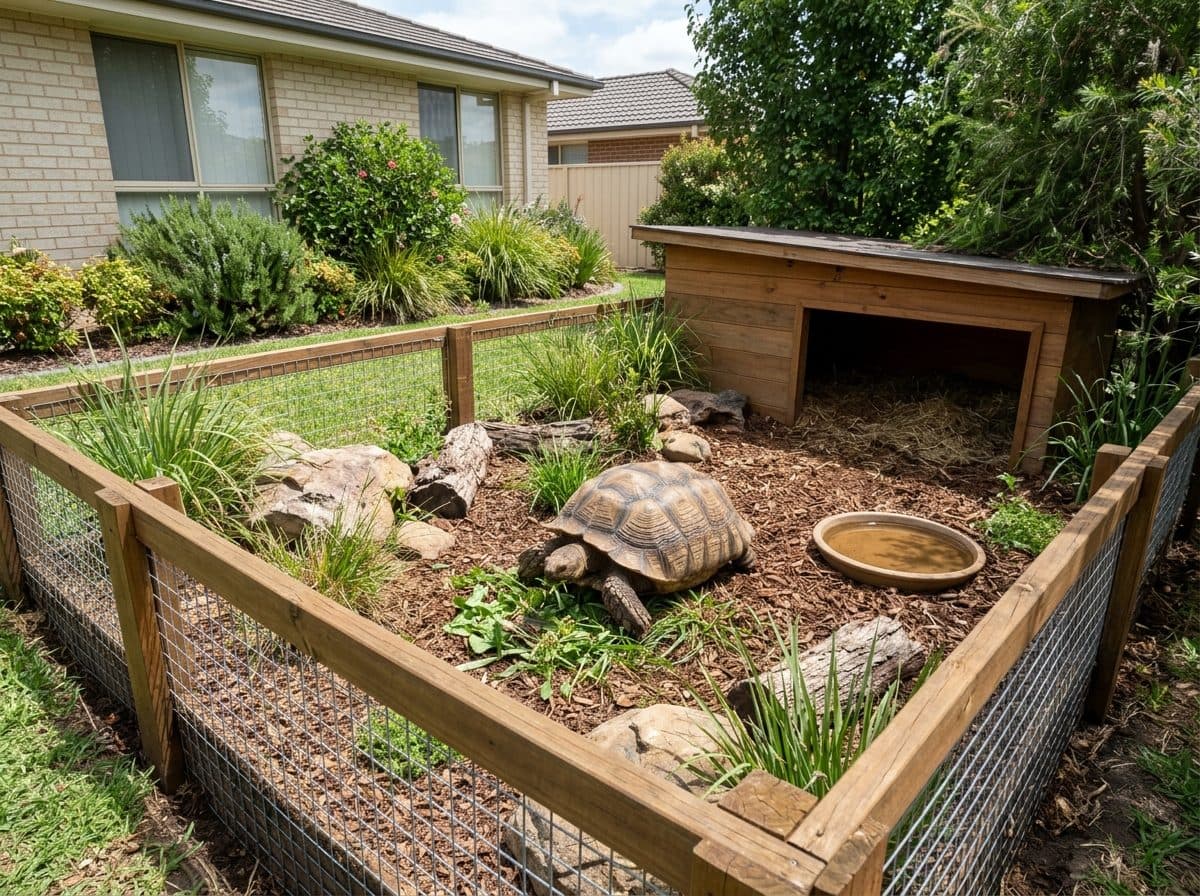
Adult minimum: 192 × 144 × 24 in (16 × 12 × 2 ft). Closed-top PVC enclosure for juveniles; secure outdoor pen for adults, horizontal layout.
Hatchlings require a closed-top chamber or PVC setup (minimum 48x24 inches) to maintain warm humidity and prevent shell pyramiding.
Keep individually; adults are highly territorial and males will fight aggressively or stress cage mates.
Adult size: 24-30 in (60-75 cm) shell length, 70-120+ lbs. Lifespan: 50–80 years. Difficulty: advanced. Hands-off: best watched; about 15–30 minutes of care a day.
Temperature & humidity
| Basking surface | 95–105°F |
| Warm side | 85–90°F |
| Cool side | 75–80°F |
| Night | 70–75°F |
| Humidity | 50–80% |
Juveniles need 70-80% relative humidity alongside ambient heat above 80°F to grow smooth shells. Adults need a warm, dry outdoor retreat that never drops below 60-70°F at night.
Lighting & heat
UVB: T5 HO 10-12% linear tube covering 1/2 of the indoor enclosure length
Heat: Halogen heat flood lamps during the day; ceramic heat emitter or radiant heat panel for night heat
Day length: 12-14 on hours
Substrate & diet
Good choices: cypress mulch; coconut coir; organic topsoil and play sand blend (70/30).
Avoid: cedar shavings; pine shavings; pure play sand; calcium sand; walnut shells; rabbit pellets.
Diet: Strictly herbivorous diet high in fiber and calcium; feed mostly grass hays (timothy, orchard grass), edible weeds, dandelion, hibiscus, and prickly pear cactus pads while avoiding fruit and protein.
Sulcata Tortoise setup checklist
Everything for a complete adult setup. Essentials are ticked; untick anything you already have.
What a Sulcata Tortoise costs to keep
- Setup (essentials)
- $533–$1,065
- Every year after
- $385–$990
- First year, all in
- $918–$2,055
| Ongoing | How often | Per year |
|---|---|---|
| Grass Hays, Weeds, and Fresh GreensSulcata tortoises require a daily high-fiber, low-protein diet consisting primarily of hays, edible weeds, and calcium-rich greens. | weekly | $150–$400 |
| Prickly Pear Cactus and Forage PlantsFresh cactus pads and edible garden foliage provide essential hydration, fiber, and nutritional variety. | monthly | $60–$180 |
| Cypress Mulch SubstrateFull substrate replacements are necessary to maintain cleanliness, prevent mold, and keep humidity levels high enough for proper shell growth. | every 2-3 months | $100–$250 |
| Calcium and Vitamin Powder SupplementsDusting food with calcium carbonated powder supports rapid skeletal and shell development in growing juveniles. | every 6 months | $20–$40 |
| T5 HO UVB Tube BulbLinear UVB lamps lose their ultraviolet output over time even if they still emit visible light. | every 12 months | $30–$60 |
| Halogen Basking BulbsIncandescent halogen bulbs burn out or lose efficiency with daily thermal cycling. | every 4-6 months | $25–$60 |
Typical US prices. Vet care isn't included: budget for a check-up with an exotics vet after you bring your pet home, and keep an emergency fund.
Before your sulcata tortoise comes home
2-3 weeks before
Assemble enclosure and install heat and UVB fixtures
Setting up the habitat early ensures all electrical gear and substrate layers are properly positioned before testing.
1 week before
Run environmental thermal testing and dial in humidity
Running heating elements for several days allows you to verify basking hot spots and cool side gradients with a temperature gun before introducing the tortoise.
48 hours before
Soak substrate and test humid hide chamber
Juvenile sulcatas require high microclimate humidity inside their hide to prevent lethal dehydration and shell pyramiding.
Day one
Perform initial warm water soak and introduce to enclosure
Hydrating the tortoise immediately upon arrival reduces transport stress before gently placing it near its humid hide.
First two weeks
Maintain a strict hands-off settling period except for daily soaking and feeding
Excessive early handling stresses new tortoises, causing them to hide continuously and refuse food.
Within 30 days
Schedule a initial exotics veterinary wellness exam and fecal check
Screening for internal parasites and baseline health ensures your new tortoise starts off with no hidden medical issues.
Common setup mistakes
- Using open-topped tortoise tables for hatchlings, causing dehydration and shell pyramiding.
- Underestimating adult size and keeping full-grown tortoises indoors without a massive outdoor pen.
- Feeding fruits or sugary vegetables that cause severe digestive upset and colic.
- Allowing night temperatures to drop below 70°F when ambient humidity is high.
- Failing to sink outdoor perimeter fencing 12 to 24 inches underground to prevent escape tunneling.
Before you buy: No US state bans sulcatas, but federal rules require a health certificate or certificate of veterinary inspection to move one across state lines (9 CFR 74), and local zoning or HOA rules may limit keeping a large adult outdoors.
Questions people ask
What size enclosure does a Sulcata Tortoise need?
Hatchlings require at least a 4x2 foot enclosed habitat indoors, but adults need an outdoor pen measuring a minimum of 16x12 feet with reinforced walls.
What temperatures do Sulcata Tortoises need?
Provide a basking spot of 95-105°F, an ambient warm side of 85-90°F, a cool zone of 75-80°F, and maintain night temperatures above 70°F.
What do I need to buy before bringing home a Sulcata Tortoise?
You need a closed enclosure, linear T5 HO UVB lighting, halogen heating, a proportional thermostat, a thermometer-hygrometer, substrate, a shallow water dish, a humid hide, and calcium supplement.
How much does setting up a Sulcata Tortoise cost?
Initial indoor setup for a juvenile costs $530-$1,070, but building a secure, heated outdoor pen for an adult typically costs $1,000-$3,000+.
Sources
The numbers on this page come from these care sheets and references, checked October 2026. How we make these guides.